
Gm frens, welcome to this week’s crypto news roundup.
Sui and Alibaba plan payments for AI agents, Dormant Satoshi-Era BTC moves, as AI spots XRP Ledger bug. OpenAI eyes crypto domains, Sui plans to launch a Bitcoin-lending network, and Bitcoin targets $94K. Finally, Zypto hosts weekly X Spaces for live crypto discussions.
Let’s dive in.
Sui and Alibaba plan payments for AI agents
Sui and Alibaba Cloud are teaming up to introduce a new way AI agents could pay for cloud services. The two firms revealed the plan at Sui Basecamp, the network’s annual conference in Singapore. Still, neither side has shared a launch date, pricing, or which services come first.
Under the plan, Alibaba Cloud services will plug into Sui Agent Payments, Sui’s toolkit for AI agent payments. As a result, agents would pay for each request as they use a service. That model differs from card checkouts, which assume a person confirms every purchase. Instead, software sets the pace of spending within limits a human defines.
However, Sui and Alibaba Cloud have not explained how users brief their agents beyond setting a budget. Basically, give AI a budget, and it could pay for the cloud services it needs without asking you to approve every purchase. A spending cap limits how much an agent can pay, but not how it spends.
Consider an agent stuck in a loop, repeatedly sending the same paid request. Each call would settle automatically, so one bug could burn through the entire budget before anyone steps in. Neither firm has said whether the system adds rate limits or alerts to stop that.
Still, the bigger test reaches beyond one network. If Sui and Alibaba Cloud scale per-call stablecoin payments, other cloud providers may feel pressure to follow suit. For now though, adoption remains early.
Dormant Satoshi-Era BTC worth $8.3M moves
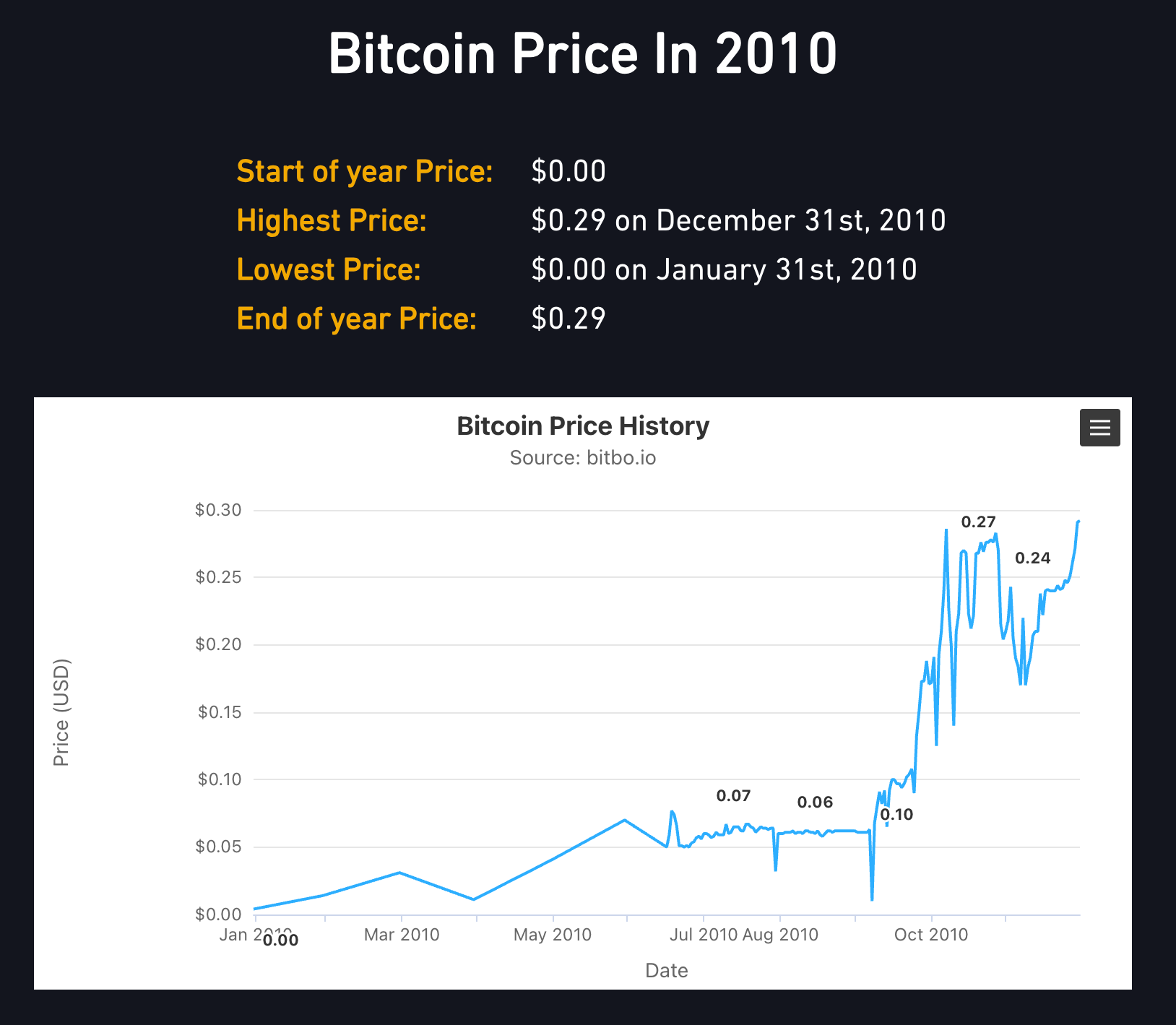
A batch of 100.02 BTC mined in July 2010, from a period commonly known as the Satoshi-era, moved last week for the first time in 16 years. At roughly $83,000 per coin, the stash was worth about $8.3 million when it left. Based on Bitbo’s highest registered BTC price in 2010, the stash was worth around $29 when it was mined.
The transaction was confirmed at 18:52 UTC in block 970,379, one of the batches of transactions that Bitcoin’s network stamps onto its public ledger roughly every 10 minutes. It split the coins between two new addresses: 10 BTC went to one and 90.02 BTC to the other.
The holder paid a fee of 1,467 satoshis (about $1.22) to move $8.3 million. Both destinations are modern bc1q addresses, a format that did not exist when the coins were mined. Nothing in the transaction identifies the owner, and moving coins between addresses is not the same as selling them.
Both pieces were mined within days of each other: 50.02 BTC in block 70,522 on July 26, 2010, and 50 BTC in block 70,748 on July 28. The two payouts were merged into a single transaction on July 29, 2010, landing in the address that just moved them.
The mining reward has been cut in half four times since. The most recent one was 3.125 BTC in the April 2024 halving, a scheduled event that repeats roughly every four years. A block mined today pays one-sixteenth of what those two blocks did.
The address itself has not been idle. It sent out 100 BTC twice on August 8, 2015, 100 BTC in December 2017, and 249 BTC in March 2018. Galaxy tracks the coins rather than the address, and says these particular coins had not moved since 2010.
Coins from Bitcoin’s first years are called Satoshi-era, after the network’s pseudonymous creator, Satoshi Nakamoto, and they have been waking up in batches. In February 2025, a 50 BTC batch, mined at about $0.10 per coin, moved after about 15 years and was then worth roughly $5 million.
AI spots XRP Ledger bug
An AI agent uncovered a decade-old bug in the XRP Ledger (XRPL) that could create trillions of XRP, prompting an emergency fix. According to security firm Veria Labs, the vulnerability could have let an attacker generate about 18 trillion XRP through a single payment transaction.
Veria founder Cayden Liao said the flaw could have threatened XRP’s $94 billion market capitalization by undermining the cryptocurrency’s fixed supply. The vulnerability was reported on September 22 and patched three days later. RippleX later confirmed that no unauthorized XRP was created, no funds were lost, and investigators found no evidence of public exploitation.
Veria’s AI-powered security system discovered the issue by analyzing “Rippled,” the software underpinning XRPL. It identified two weaknesses that, when combined, could bypass its monetary safeguards.
The first involved an integer overflow in the payment engine, where deliberately constructed trading offers could cause the system to miscalculate the amount a buyer owned. A second vulnerability affected the network’s supply-protection mechanism. Since it relied on the same flawed arithmetic, it could fail to recognize that new XRP tokens had been created.
The underlying payment-engine code dates to 2015, while the affected supply safeguard was introduced in 2017. That longevity matters, given the network’s security history. Liao said the XRPL codebase had undergone more than a dozen audits and security contests since 2024, with its bug bounty programs distributing more than $1 million.
Despite those efforts, the combined vulnerability remained undetected until Veria’s AI system identified it, assembled a working exploit, and demonstrated the problem on a local network. The incident has prompted RippleX to reassess how it protects critical infrastructure, particularly older software that has survived years of conventional security reviews.
OpenAI, Google, and Meta eye AI and crypto domains
OpenAI, Google, and Meta are competing for AI-related internet domains as cryptocurrency firms pursue their own digital naming rights. The three technology companies are among 13 applicants seeking control of the .agent domain extension, making it one of the most contested names in the latest expansion of the internet’s address system.
The competition emerged after the Internet Corporation for Assigned Names and Numbers (ICANN) revealed 1,615 applications on October 7. This marks the first application round for new generic top-level domains since 2012. The most applications come from North America, followed by Europe, Asia/Australia/Pacific, Africa, and Latin America/Caribbean.
Although 333 applications are brand-related, the competition extends beyond them. Seven applicants are seeking .agi, a reference to Artificial General Intelligence, while five applicants target .mcp, Model Context Protocol. The applications reflect how technology companies are positioning themselves for a future in which AI agents increasingly interact with websites, software services and potentially financial infrastructure.
The competition has also drawn cryptocurrency companies seeking extensions tied to digital assets, blockchain networks, and online payments. ICANN’s preliminary contention data shows 11 applications for .bit, making it one of the most contested individual names alongside .agent. Five applicants are seeking .crypto, while .wallet and .dao attracted four applications each. The .bitcoin, .btc and .nft extensions each received two applications.
The interest reflects an effort to secure naming infrastructure that could eventually connect conventional internet addresses with blockchain-based identities and financial services. However, approval of a crypto-related domain would not automatically enable blockchain transactions or wallet functionality. Such services would require additional technical integrations. Still, none of the contested domains has been awarded.
Sui set to launch a Bitcoin-lending network
Bitcoin-backed finance is about to get a massive, well-funded liquidity boost. Layer-1 blockchain Sui will launch Hashi, a new institutional network that lets holders use Bitcoin as collateral for lending without moving it off the Bitcoin ledger.
To support the ecosystem, the initiative has already secured $500 million in capital commitments from a coalition of more than 20 industry partners. While these are commitments rather than immediate deposits, the pre-pledged capital ensures that when the system debuts, markets can open with deep liquidity rather than starting empty.
This launch comes amid a broader shift in Bitcoin-backed finance, where borrowing is moving far beyond speculative crypto trading. Bitcoin holders now use Bitcoin-collateralized loans to cover real-world expenses like university tuition, real estate acquisitions, and corporate working capital.
Here’s how the system overcomes these institutional constraints. Instead of bridging across blockchains, users securely lock their BTC in a vault address directly on the Bitcoin blockchain. A 2-of-2 multisig secures this address, requiring cryptographic sign-off from both Hashi’s validators. Hashi also has a separate, independent guardian layer that monitors and slows suspicious collateral movements.
While the real Bitcoin stays safely frozen on the Bitcoin network, Hashi mints hBTC, a digital voucher token on Sui, backed directly by that deposit. This is where the lending action begins. Apps on Sui can use these hBTC vouchers to fuel lending, borrowing, credit markets, and real-world asset trading.
When a user wants to exit, the multisig permanently burns the hBTC voucher on Sui, triggering the release of the original Bitcoin back to the user on the Bitcoin network.
To meet strict institutional compliance and security standards, Hashi has undergone rigorous vetting. Security firm Certora formally verified Hashi’s smart contracts, while another firm, CommonPrefix, reviewed the cryptography of its multi-party computation (MPC) protocol.
Bitcoin targets $94K as key price barrier looms
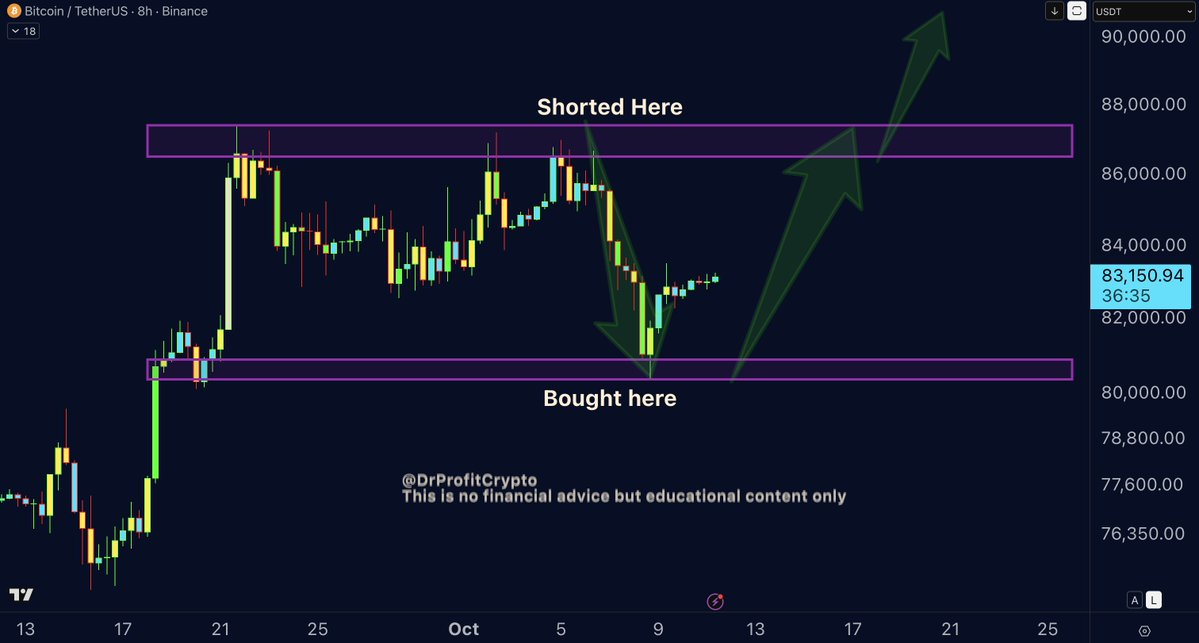
Crypto analyst Doctor Profit expects the world’s largest crypto asset to resume its upward move soon, even though Bitcoin failed to overcome $84,000 on Monday. He has a new price target of $94,000.
In his report, the analyst said the recent market correction could set the stage for the next leg of the bull market. He believes BTC has moved past the correction phase and is now preparing for another rally. He says the price must first recover the $86,000 to $89,000 region, but expects it to regain momentum and climb toward $94,000.
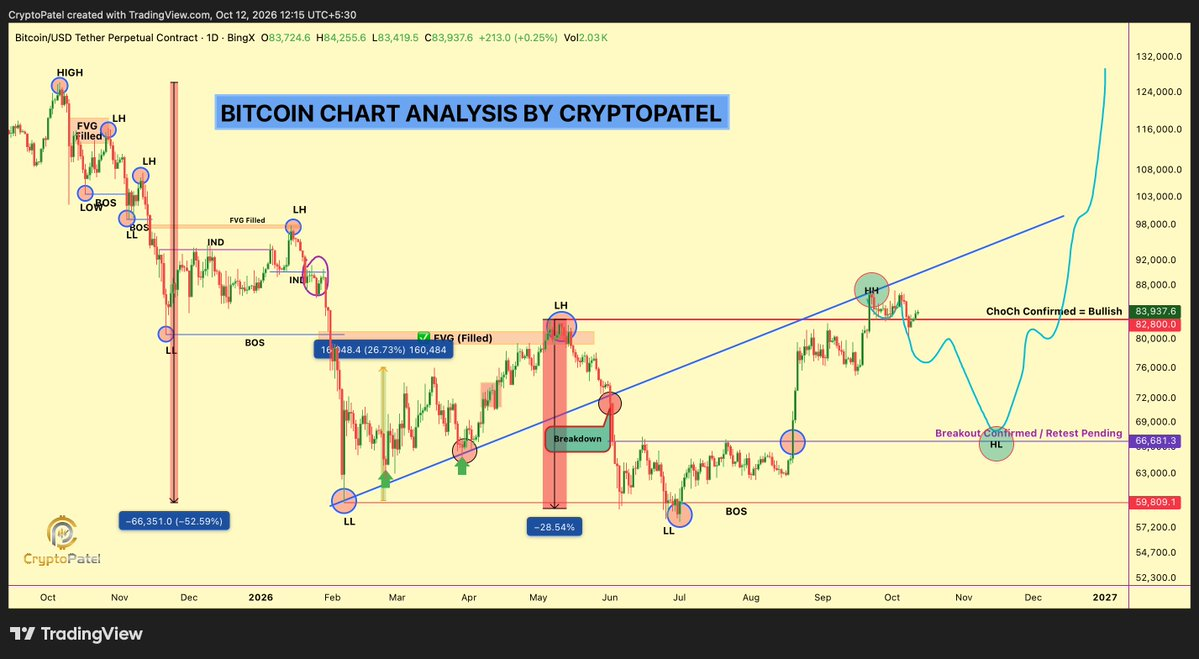
Crypto analyst Crypto Patel shared a similar bullish outlook, projecting a potential path toward $100,000. He said Bitcoin had broken above the $67,000 resistance level and could retest it before moving higher. If buyers defend this zone, BTC could form a higher low and gain momentum for another rally.
Other analysts also shared thoughts on what could trigger the next big move north.
Ali Martinez paid close attention to $84,000, saying it marks the 50 SMA and could unlock the next rally. Ali noted that the last time BTC bounced from the bottom of its recent price channel, the 200 SMA held and a 4-hour close above the 50 SMA confirmed the uptrend.
Scient weighed in on the asset, claiming that BTC has formed “the cleanest cup and handle pattern you will ever see,” targeting $105,000. Toz assumed the cryptocurrency may mimic its late-2022 performance, which consisted of a substantial dip followed by a major ascent. Finally, Crypto Rover shared an intriguing chart and claimed that the last time Bitcoin flashed the Golden Cross, it rallied over 500%.
Zypto hosts weekly X Spaces for live crypto discussions
Zypto is bringing its community together every Wednesday through live X Spaces. It creates a regular forum for discussions about cryptocurrency, decentralized finance, and self-custody. The sessions combine conversations with industry guests and a live giveaway supported by the Zypto Foundation.
Hosted by Voice of DeFi and Zypto co-founder Joe Parkin, the weekly discussions give listeners a closer look at the company’s ecosystem. The format puts community engagement at the center of the conversation, connecting listeners with the Zypto workforce and global guests.
Zypto said the program includes interviews on integrated projects, giving listeners a chance to hear directly from teams working within its wallet and payments ecosystem. These conversations connect product developments with broader discussions about how cryptocurrency can be used for payments and other practical applications.
A live giveaway adds a participation incentive, with the Zypto Foundation supporting listener rewards. The giveaway runs alongside the program’s focus on company updates, industry conversations, and direct community engagement.
Users can join the sessions through the ZyptoApp account on X. Recordings are available afterward for those who miss the live discussion, allowing the conversations to reach listeners beyond the Wednesday broadcast.
Find out more here.
Closing remark
Sui and Alibaba Cloud plan to let AI agents pay for cloud services per request within user-set budgets. A holder moved 100.02 BTC worth about $8.3 million for the first time since 2010, splitting the coins between two new addresses.
Veria Labs’ AI system uncovered a longstanding XRP Ledger vulnerability, prompting an emergency patch with no reported losses. OpenAI, Google, and Meta are competing for top-level domains. Sui is preparing to launch Hashi, allowing holders to access lending through Sui-based tokens backed by BTC locked on the Bitcoin network.
Analyst Doctor Profit sees Bitcoin reaching $94,000 if it reclaims the $86,000-$89,000 range, while other traders point to technical signals supporting further gains. Zypto hosts live X Spaces every Wednesday featuring crypto discussions, project interviews, community updates, and Foundation-supported giveaways.
FAQs
Why did Sui and Alibaba team up?
Sui and Alibaba Cloud are teaming up to introduce a new way AI agents could pay for cloud services.
How much was the Satoshi-era BTC worth?
The Satoshi-era 100.02 BTC was worth about $8.3 million when it moved.
What is the latest on XRP Ledger?
An AI agent uncovered a decade-old bug in the XRP Ledger (XRPL).
How many companies applied for the AI and crypto domains?
ICANN revealed 1,615 applications, including companies like OpenAI and Google.
What is the latest on Sui?
Sui is set to launch Hashi, a new institutional network that allows holders to use Bitcoin as collateral for lending.
Related topics