Ownership is the thing worth tracking, and almost everything shipping today arrives with somebody attached to it. American accountants set the terms on which a stablecoin counts as cash, Citi prepared to hold Bitcoin for institutions, Toyota put a bond inside its payments app, and a regulated dollar token from Abu Dhabi landed in a wallet where the keys stay with the user.
- To count as cash, a stablecoin has to give its holder a redemption right with the issuer, which is another way of saying someone must be standing behind it.
- Citi will custody Bitcoin for institutional clients through a new Custody+ platform later this year.
- 100,000 yen buys a one-year Toyota bond inside Toyota Wallet, with no securities account required.
- USDU, issued under Abu Dhabi supervision, now sits in Bitcoin.com’s self-custodial wallet as an ERC-20.
Each of these widens what you can do with digital money. Each also answers the ownership question differently, and that answer is the part worth reading before the headline is.
American accountants set three tests for stablecoins as cash
 Source: Cointelegraph
The Financial Accounting Standards Board proposed an update clarifying when a stablecoin qualifies as a cash equivalent under US accounting principles. A token has to clear three tests: an on-demand contractual redemption right with the issuer, a direct right to redeem for a known amount of cash, and one-to-one segregated reserves held in short-term, highly liquid assets.
Secondary market liquidity on its own does not qualify a token, and reserves made up of crypto assets or gold disqualify one outright on valuation risk. Treating a stablecoin as a cash equivalent remains a choice rather than an obligation, and the comment period runs until November 19.
Zypto take: Read the three tests and you can see precisely what a stablecoin is. Cash status is granted on the strength of an issuer’s promise to redeem, so the asset is worth exactly as much as the company standing behind it.
That is worth saying plainly rather than glossing over. Stablecoins like USDC are enormously useful for moving value, and they are issued instruments whose issuer keeps the ability to freeze them. An asset with no issuer behind it is a different thing.
Citi prepares to hold Bitcoin for institutions
 Source: Decrypt
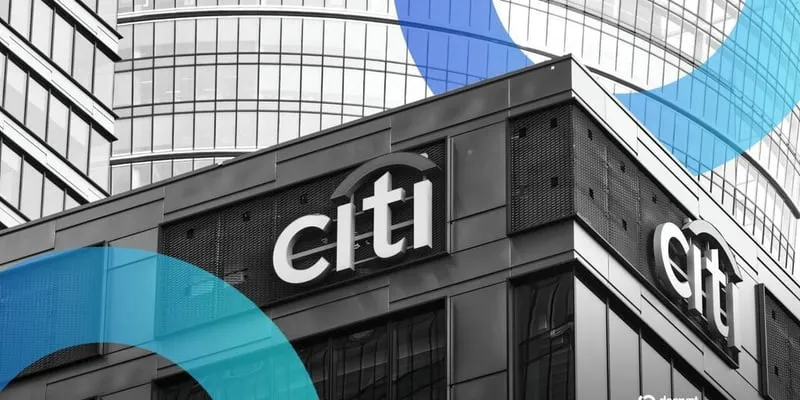
Citi expects to launch Bitcoin custody for institutional clients later this year through Custody+, a new suite from Citi Investor Services that puts traditional securities and crypto custody inside one framework.
The platform covers real-time asset servicing, instant settlement and liquidity tools, and builds on the bank’s existing Token Services work with tokenized deposits. Citi first signalled crypto custody plans in November 2025, and it joins a run of large institutions extending into digital assets.
Zypto take: Custody is a real service with a real customer. An institution answering to auditors and regulators needs somebody accountable holding the keys, and that is exactly what Citi is selling.
The trade is explicit, and naming it is the useful part. A custodian holds it, so a custodian can stop it. Zypto App is built the other way round, with keys on your own device across 20+ blockchains, and Bitcoin held that way has no company behind it at all.
Toyota sells a bond inside its payments app
 Source: Cointelegraph
Toyota Finance opened applications on August 18 for a one-year tokenized bond paying 1.72%, sold to retail investors in Japan directly inside Toyota Wallet, the company’s mobile payment app. The minimum is 100,000 yen, roughly 676 dollars, against a total issue of 1 billion yen, running on blockchain infrastructure from Japanese security-token firm BOOSTRY.
The route matters more than the coupon. Buyers apply inside the app without opening a securities account, where Toyota Finance’s first tokenized bond in March 2025 was distributed through securities companies. Investors can also receive Toyota Wallet balances, alongside perks including Fuji Speedway tickets.
Zypto take: Removing the securities account is the entire story. A bond you can buy in the app you already use for payments reaches people that a brokerage onboarding form never will.
This is what real-world assets coming onchain actually look like day to day. Less a trading venue, more an ordinary financial product turning up where people already are.
A UAE-regulated dollar token lands in a self-custodial wallet
 Source: crypto.news
Bitcoin.com added USDU to its self-custodial web and mobile wallet as an ERC-20 on Ethereum, letting users hold, send and receive the token while keeping control of their private keys. Availability depends on local rules.
USDU is issued by Abu Dhabi Global Market-based Universal Digital Intl. Limited, regulated by the Financial Services Regulatory Authority for fiat-referenced token issuance and registered with the UAE central bank as a foreign payment token issuer. Reserves are held one to one in liquid dollars at regulated UAE banks, with monthly independent attestations. The token launched in January 2026.
Zypto take: The detail worth noticing is where the token landed. A regulated dollar token sitting in a wallet whose user holds the keys is an arrangement in two halves: the coins are yours to move, and the issuer keeps a redemption and freeze power over the token itself.
Knowing which half is which is the skill. The Zypto multichain wallet holds 24,000+ assets across 20+ blockchains under keys you control, so dollar tokens are one option among many rather than the whole of what you own. Download Zypto App.
Key Takeaways
- Digital money keeps arriving with somebody attached to it, and the question each time is who can redeem it, freeze it or refuse it.
- An accounting rule that grants cash status on an issuer’s promise describes exactly what a stablecoin is, which is an issued instrument rather than an asset with nobody behind it.
- Custody is a genuine service for institutions that need someone accountable. It is also the opposite of holding your own keys, and both things are true at once.
- Access is widening in ordinary places. A bond sold inside a payments app reaches people a brokerage form never would.
- Regulated dollar tokens are spreading well beyond the United States. Holding one in your own wallet settles who can move it, not who can freeze it.
Related topics