Payment companies and finance ministries moved on the same question this week: who runs the pipes crypto settles through. A South Korean card issuer signed up to help secure a blockchain. Stablecoin lending on the XRP Ledger sits one vote from switching on. And three of Asia’s biggest economies agreed to build the connective tissue for cross-border crypto payments together.
- Samsung Card and Kakao Pay just signed up to secure a blockchain, not list a token on one.
- One validator vote stands between $837 million in XRP Ledger stablecoins and a working lending market.
- Fourteen economies, one working group: China, Japan, South Korea and the ASEAN bloc are building the connective tissue for cross-border crypto payments.
Different parts of the system are reaching the same conclusion at once. Stablecoin settlement isn’t a crypto-native experiment anymore. Card issuers want to run it, and governments want to write the rules that let it cross borders, not rules that keep it penned in.
Samsung Card and Kakao Pay sign on to secure a blockchain
 Source: The Block
LayerZero named Samsung Card and Kakao Pay as genesis validators for Zero, a new layer-1 blockchain going live November 30 alongside the company’s ATLAS trading infrastructure. Samsung Card brings close to 14 million cardholders into the validator set. Kakao Pay brings roughly 26 million monthly users in South Korea.
Kakao Pay’s CEO said the company plans to use Zero to connect traditional finance with onchain markets, including stablecoins pegged to the Korean won.
Zypto take: A card issuer volunteering to help secure a blockchain is a quieter signal than any press release. Samsung Card isn’t dabbling in crypto trading. It’s deciding that settlement itself belongs onchain.
Zypto’s stablecoin support already treats a dollar-pegged stablecoin and a handful of others the same way: something you hold and move yourself, not something a bank clears on your behalf.
Ripple’s XRP Ledger lending vaults near their launch
 Source: CoinDesk
Ripple’s plan to bring onchain lending to the XRP Ledger needs one more validator vote before its two-week activation clock starts. The vaults that would hold lender deposits already carry about $837 million in stablecoins and are on track to switch on December 9.
Once live, brokers will write fixed-term loans to payment companies and other borrowers straight out of those pools, with depositors earning interest and the broker’s own capital absorbing the first losses.
Zypto take: Lending markets that switch on by validator vote instead of a bank’s credit committee are a different kind of financial plumbing. The rules are visible before the money moves, not after.
Zypto’s XRP wallet already lets you hold and move XRP yourself, without asking anyone’s permission first, vault or no vault.
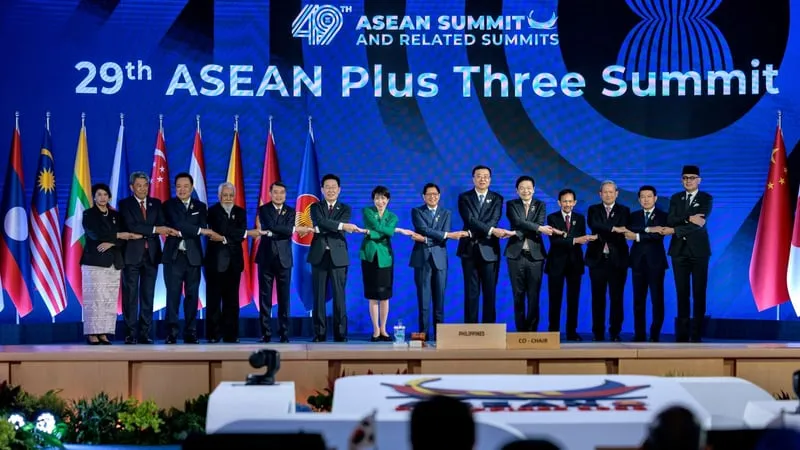
China, Japan, South Korea and ASEAN plan shared payment rules
 Source: The Block
Finance ministry and central bank officials from China, Japan, South Korea and the 11 ASEAN member states agreed to form a dedicated working group on cross-border digital payments and crypto regulation, following meetings in Kyoto this week. The group grew out of a May meeting in Uzbekistan, where officials were asked to set out, by the end of 2026, how retail and wholesale payments could connect across the region and how stablecoins should be regulated.
The program is meant to cover remittances, tourism and e-commerce payments alongside the regulatory groundwork.
Zypto take: Fourteen economies agreeing to build the connective tissue for cross-border payments is exactly the regulatory groundwork Zypto’s cross-border tools have been running ahead of for years.
Paying a bill abroad with crypto already moves value across a border as crypto and lands it with the biller in their own currency, today, well ahead of any working group.
Key Takeaways
- Real-world payment companies are taking on blockchain infrastructure roles themselves, a step beyond the crypto trading products they already offer.
- Onchain lending markets are forming through validator votes, a visible governance process instead of a bank’s private underwriting.
- Fourteen Asian economies are building the regulatory connective tissue for the cross-border rails crypto already runs on.
- The common signal across all three: stablecoin settlement has moved from experiment to something institutions want to own and govern.
Card issuers, ledger validators and finance ministries are all converging on the same question this week. The next move belongs to whoever makes crossing a border with real value feel as ordinary as paying a bill at home.
Prices, fees, features and availability mentioned in this article were correct at the time of publishing and may have changed since.
Related topics