The week that just closed put a record next to Bitcoin’s name, and the trigger came from a Treasury desk rather than anything onchain. Around it, money kept getting wired into everyday finance: a stablecoin bank priced at a billion dollars, a licensing window in Pakistan closing on September 5, and two banks generating wallet keys designed to outlast quantum computers.
- Bitcoin added $14,264 in seven days, its largest dollar gain on record.
- SBI led a $68 million round that values stablecoin bank Fasset at $1 billion.
- September 5 is the date Pakistan’s crypto platforms either hold a license or stop.
- Bison Bank and DK Bank are testing post-quantum wallet signatures, with three regulators watching.
A bond-buyback decision set the price, a funding round set a valuation, and a portal opening set a deadline. The common thread is institutional machinery organizing itself around assets it doesn’t issue.
Bitcoin’s biggest dollar week on record
 Source: The Block
Bitcoin closed the week ended August 23 at $77,387, up $14,264 in seven days. That’s a 22.7% move, and in dollar terms it’s the largest weekly gain in Bitcoin’s history.
The run started after the US Treasury said it would expand its bond buyback program, which pulled yields off 19-year highs. Spot Bitcoin ETFs took in $1.92 billion over the week to August 21, their strongest week since October 2025.
Zypto take: A record week for Bitcoin traces back to a Treasury desk changing how it buys back bonds, which is a useful reminder of what the asset is measured against. Bitcoin has no issuer standing behind it and no switch to freeze it, and that part doesn’t change from one week to the next.
Fasset hits $1B on stablecoin banking
 Source: Fasset
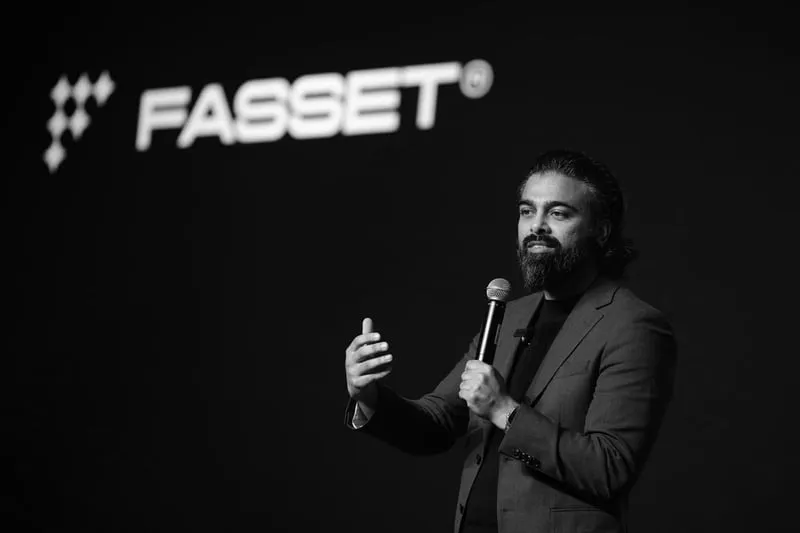
Fasset raised $68 million in a Series C led by SBI Group at a $1 billion valuation, three months after a $51 million Series B and taking its 2026 funding to $119 million.
The money goes into Own Network, the company’s regulated network of banks, telcos, payment providers, liquidity partners and settlement venues spanning more than 100 banking corridors. Fasset says it handles $40 billion in annualized transaction volume across 125 countries, serving 3 million wallets and over 1,000 enterprise customers.
Zypto take: A billion-dollar valuation for a company whose product is moving dollars into places where dollar accounts are hard to open tells you where the demand sits. Stablecoins do that job inside Zypto App today across USDT, USDC, DAI, USD1 and HBD, with the balance sitting on your own device instead of on someone else’s ledger.
Pakistan sets a September 5 deadline
 Source: CryptoSlate
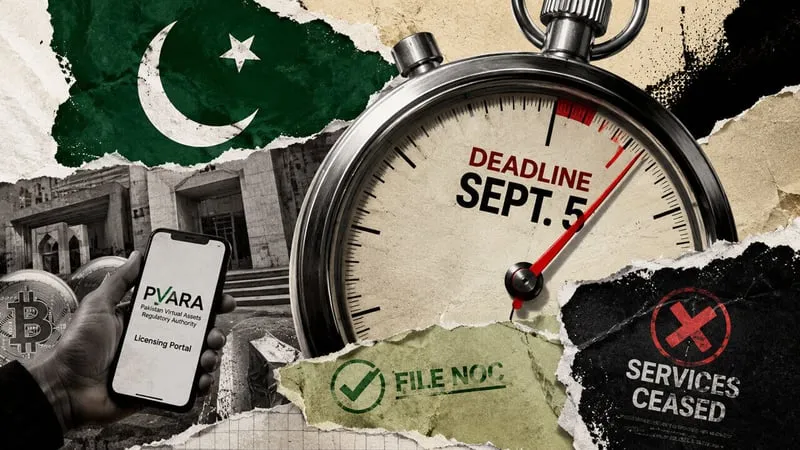
Pakistan’s Virtual Assets Regulatory Authority opened its licensing portal on August 22, a day after the final virtual-asset service rules were issued. Existing exchanges and custodians have until September 5 to apply for a no-objection certificate or stop offering the affected services.
There are three tracks: the certificate, a full service-provider license, and a sandbox for new products. Binance and HTX already hold certificates from December 2025 and can go straight for full licenses. Operating past the deadline without applying is an offense, though the rules say little about how a platform is supposed to wind down withdrawals or custody accounts.
Zypto take: Two weeks is a short runway for a custodian, and any firm that misses it takes its users’ access down with it. A license decides which companies may hold your money in Pakistan, not what you’re able to hold yourself, and paying a bill with crypto is where that difference shows up in an ordinary month. Download Zypto App.
Banks test post-quantum wallets
 Source: Cointelegraph
The Responsible Fintech Institute and Safeheron opened a cross-regional pilot testing quantum-resistant wallets and onchain transfers. Bison Bank and DK Bank will generate keys and move funds in a shared test environment.
Three regulators are watching phase one before joining the governance work: Abu Dhabi Global Market, Bhutan’s Gelephu Financial Services Office and Malta’s Financial Services Authority. The setup runs a multiparty computation protocol supporting ML-DSA-65, a post-quantum signature standard published by the US National Institute of Standards and Technology, on a quantum-resistant NEAR testnet.
Zypto take: Signature schemes get replaced about once a generation, and the detail worth noticing is that regulators are in the room while this one is being tested rather than after. Anyone holding their own keys in Zypto App has a direct interest in that timeline, not just the banks running the pilot.
Key Takeaways
- Bitcoin’s biggest dollar week started with a decision about US bond buybacks, a reminder that an asset with no issuer is still quoted in a currency someone manages.
- Cross-border demand for digital dollars is pulling in bank-scale capital, and it’s going into settlement corridors rather than trading products.
- A license decides which companies may hold your money in a given country. It doesn’t decide what you can hold for yourself.
- Post-quantum key security has moved from conference panels onto a testnet with regulators observing, which puts a clock on it.
- Watch September 5: Pakistan’s deadline will show whether a licensing regime formalizes a market or thins it out.
Related topics