Crypto is being written into the paperwork of mainstream finance. Brazil’s largest private bank has filed to provide it, corporate treasurers are piloting tokenized money, and a peso stablecoin now has a federally chartered custodian on the US side of the border.
- Itaú has filed with Brazil’s central bank to intermediate and custody crypto.
- 88% of large companies in a DBS survey use or pilot tokenized money.
- Six blockchains now carry MXNB, Bitso’s peso stablecoin, under Anchorage custody.
- Split-key Bitcoin custody is in preview on Google Cloud.
Each step puts digital assets closer to where people and companies already keep their money, which makes it worth knowing who holds the keys.
Itaú files to be a crypto provider in Brazil
 Source: Bitcoin Magazine
Itaú Unibanco, Brazil’s largest private bank, has formalized its role as a crypto service provider with the Central Bank of Brazil. The filing covers intermediation and custody of crypto assets, according to local press reports.
Itaú has let retail clients buy and sell Bitcoin in its íon investment app since late 2025, with the bank holding custody. The filing falls under Brazil’s licensing rules for virtual asset providers, which took effect on February 2 and set capital, asset-segregation and anti-money-laundering requirements.
Zypto take: When the country’s biggest private bank puts Bitcoin in its investment app, buying crypto becomes as ordinary as buying a fund. Ownership is the next step: Bitcoin held by a bank is the bank’s to control, and Bitcoin in your own wallet has no freeze switch at all. Zypto App keeps the keys on your phone. Download Zypto App.
88% of large firms try tokenized money
 Source: CoinDesk
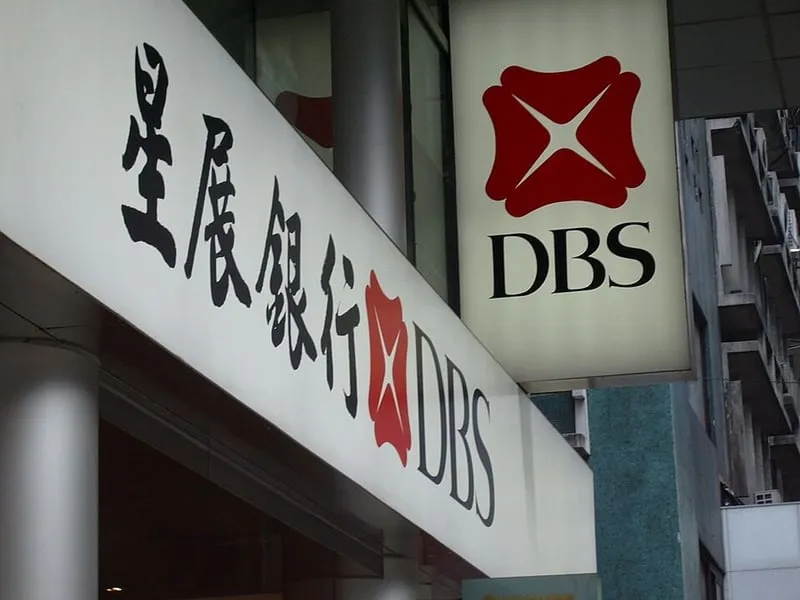
A DBS survey run by EY found that 88% of large companies are using or piloting tokenized money. It polled 422 business and finance leaders across 11 markets, all at firms with more than $500 million in annual revenue.
Stablecoins lead: 63% use them or plan to, ahead of tokenized deposits at 53% and tokenized money market funds at 52%. And 71% say their cross-border payments have improved or will within two years.
Zypto take: Cross-border payments are where companies feel the gain first, and that holds for a shop with overseas customers as much as for a $500 million treasury. Zypto Pay lets merchants accept crypto and stablecoins online or in person and settle in fiat or 100+ cryptocurrencies, with 0% merchant-side processing fees.
Anchorage holds Bitso’s peso stablecoin
 Source: Decrypt
Anchorage Digital Bank, a federally chartered crypto bank, now custodies MXNB, Bitso’s Mexican peso stablecoin, on six blockchains including Ethereum, Arbitrum, Base and Polygon. In return, Bitso has listed USDPT and USAT, the dollar stablecoins from Western Union and Tether that Anchorage issues.
The US-Mexico corridor moves tens of billions of dollars a year, much of it still through wires and cash pickup. About 15% of it already runs through Bitso’s infrastructure.
Zypto take: A peso stablecoin and a dollar stablecoin on the same rails let money cross the border in the currency each side spends. For someone covering a bill back home, there’s an even shorter route: with Zypto bill payments you can pay a biller in Mexico straight from your wallet, and it arrives in pesos.
Google previews split-key Bitcoin custody
 Source: Cointelegraph
Google Cloud has put a multi-party computation service for institutional Bitcoin custody into preview. Several financial institutions can jointly approve and sign a transaction, and no single party ever holds the complete private key.
Google is showing the service at its MPC Symposium in New York this week, where speakers from Morgan Stanley, Citi and Wells Fargo are listed, and aims to make it generally available in early 2027.
Zypto take: Split-key signing means no single device or party can move funds alone, and that works for one person’s savings as well as for a bank’s vault. The Vault Key Card splits signing authority between your phone and the card, so nothing moves without a tap.
Key Takeaways
- Brazil’s licensing rules have given its largest private bank a formal route to offer and hold crypto.
- Companies are adopting tokenized money where it pays off first, in cross-border payments.
- Local-currency stablecoins let money arrive in the currency people spend.
- Split-key signing protects a bank’s vault and a personal wallet on the same principle.
- As banks and big companies grow comfortable with digital assets, expect more people to ask who holds the keys.
Prices, fees, features and availability mentioned in this article were correct at the time of publishing and may have changed since.
Related topics