The dollar token keeps being handed jobs that used to belong to a bank account. Today it pays for API calls without a human involved, settles share purchases from a wallet nobody else can touch, and sits in a national tax code as a category of its own.
- Cloudflare began issuing programmable stablecoin wallets so AI agents can buy APIs, data and content on their own.
- 724 tokenized US stocks, the whole S&P 500 among them, are now purchasable from a self-custody wallet using USDC.
- Austria’s regulator granted Bybit’s payments arm an electronic money license covering the European Economic Area.
- Nigeria’s revenue service put its crypto tax rules in writing and left stablecoin sales outside the 1% withholding.
Every one of these treats a stablecoin as a way to pay rather than something to trade. A platform is wiring it into machine spending, a broker into share settlement, a regulator into a license, and a tax office into an exemption.
Cloudflare gives AI agents their own stablecoin wallets
 Source: The Block
Cloudflare has started rolling out programmable stablecoin wallets built for AI agents to pay for APIs, data and online content without a person approving each purchase. Wallet handles can be claimed now, with funding and payment features following.
There are two types. Account Wallets hold money for an individual or an organization and set the rules. Virtual Wallets operate through API keys and do the actual buying, bounded by a spending allowance, a list of approved merchants and a maximum transaction size.
Payments run over x402, the micropayment protocol Coinbase released in September 2025. Cloudflare is also working with Visa, Mastercard and American Express standards for identifying agents a merchant can trust.
Zypto take: Handed a blank slate for machine spending, the industry reached for a dollar token with programmable limits instead of a card number kept on file. Businesses at the receiving end still need somewhere for those payments to arrive, which is where Zypto Pay already sits, with merchant-side processing fees from 0%.
The S&P 500 arrives inside self-custody wallets
 Source: CoinDesk
Dinari has opened tokenized US stock trading to eligible American investors holding assets in their own wallets. Its dShares cover 724 US stocks, including every company in the S&P 500, issued on Ethereum, Arbitrum, Base and Avalanche, with Solana and Sei listed as next.
Buying and selling happens in USDC. An investor sends USDC from a personal wallet to fund a brokerage account in their own name and receives tokens matched one for one against shares held in regulated accounts, with Circle handling money transmission.
Dinari registered as a broker-dealer in 2024, the first tokenized-stock provider in the US to do so. The SEC’s Division of Trading and Markets approved the setup, and FINRA cleared the company to accept USDC for stock purchases.
Zypto take: The ownership model is the story here, not the ticker list. Once a share, a stablecoin and a Bitcoin balance all answer to the same key on your phone, real world assets stop being a separate category and become one more thing a wallet holds.
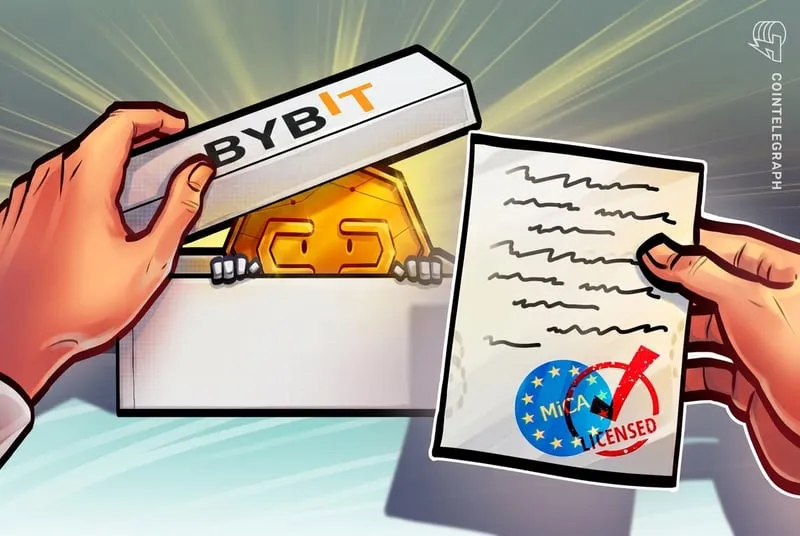
Bybit’s payments arm wins a European money license
 Source: Cointelegraph
Bybit Payments GmbH has received an electronic money institution license from Austria’s Financial Market Authority. The approval covers the European Economic Area with the exception of Malta, served through the Bybit.eu platform.
It sits alongside the Markets in Crypto-Assets authorization that Bybit EU GmbH has held since May 2025, and clears the way for person to person payments, merchant payment tools, open banking features and card products.
Zypto take: Licenses are the quiet half of adoption, and they decide whether a balance ever reaches a checkout at all. Zypto users already use their crypto for real-world spending through Zypto Premium VISA Cards, wherever Visa is accepted.
Nigeria writes stablecoins into its tax code
 Source: Technext
The Nigeria Revenue Service has published guidelines on the taxation of virtual assets, closing a long stretch where the obligation existed in law and the detail did not. Exchanges and peer to peer platforms must now withhold 1% of the proceeds from taxable disposals, treated as an advance payment against the taxpayer’s final bill rather than a separate charge.
Staking, mining, airdrops and DeFi returns can attract 10% withholding when they count as income, and a 1.5% stamp duty applies to transfers between tokens and fiat. Sales of stablecoins are exempt from the 1% withholding.
Platforms also have to record customer names, contact details and tax identification numbers. Income tax and stamp duty are remitted in the token the transaction started in, while VAT follows the payment currency.
Zypto take: Carving stablecoins out of the disposal charge is a tax office describing what people actually do with them, which is pay. That reading sits behind USDC to Cash too, where the point is local currency in hand rather than a gain to report.
Key Takeaways
- Builders, brokers, regulators and tax authorities all treated a stablecoin as a payment instrument this week, which says more than any single launch.
- Self-custody is quietly becoming an account type. Brokerage, machine spending and cash access are all being wired to a key you hold yourself.
- Permission moves adoption as much as technology does. An Austrian license and a Nigerian withholding rule change what reaches everyday use faster than most product roadmaps.
- Watch the exemptions. When a tax code separates stablecoins from other digital assets, it is recording how they are used rather than granting a favor.