A card network has decided to own the machinery for dollar tokens rather than rent it. Mastercard’s $1.8 billion purchase of BVNK closed this week, BlackRock started packaging cash for other companies to hold behind their stablecoins, and traders quietly moved a record share of their spot business away from exchange accounts.
- Mastercard completed its $1.8 billion acquisition of BVNK, bringing stablecoin payouts, settlement and treasury flows in house.
- 24% of spot crypto trading now runs through DEXs, an all-time high, up from 17% a year ago.
- Two new BlackRock funds hold cash and Treasuries onchain, built to qualify as stablecoin reserves under the GENIUS Act.
- Researchers cataloged 4,224 contracts that show a safe transaction preview and then do something else entirely.
Four different layers of the same dollar are being rebuilt at once: the network that moves it, the venue where it trades, the reserve that backs it and the signature that releases it. Only the last one belongs to you.
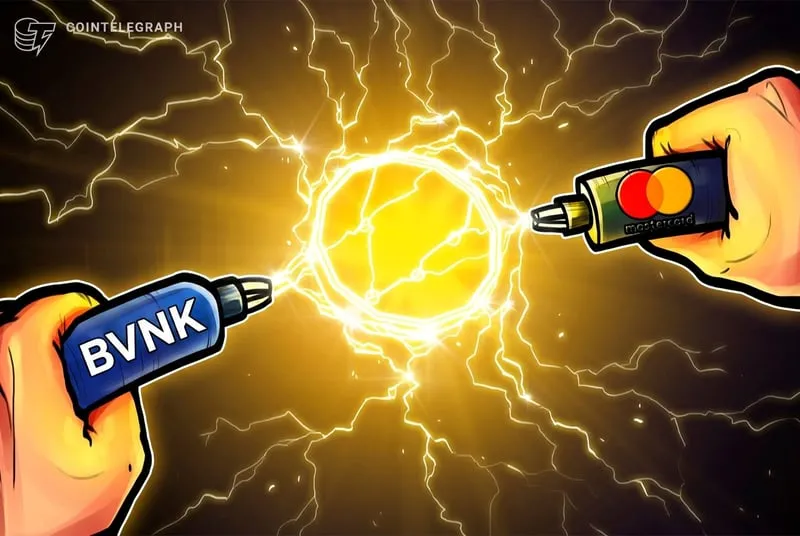
Mastercard closes its $1.8 billion stablecoin purchase
 Source: Cointelegraph
Mastercard has completed its acquisition of stablecoin infrastructure firm BVNK, a deal worth up to $1.8 billion including $300 million in contingent payments. The agreement was first announced in March.
Mastercard says the combination will help banks, fintechs and enterprises use stablecoins and tokenized assets across cross-border business payments, payouts, settlement and treasury flows. It points to banks connecting customer accounts to wallets, and payment providers settling with merchants around the clock.
Zypto take: When a card network pays this much to own the dollar-token layer instead of partnering into it, the question of whether businesses will accept crypto is finished and the argument moves to who does it well. Zypto Pay already settles merchant payments in fiat or 100+ cryptocurrencies with merchant-side processing fees from 0%.
A quarter of spot trading now skips the exchange
 Source: The Block
The DEX to CEX ratio closed the month at an all-time high of 24%, up from 17% a year ago, with Uniswap and Aerodrome carrying much of the onchain flow. Overall spot volumes fell hard across both, and Coinbase and Gemini have both cut staff.
Deeper onchain liquidity and faster crosschain routing get the credit for the share shift, alongside a general drop in trading appetite and prediction markets absorbing some of the activity. As the report puts it, the improved experience and cost “will likely catalyze continued adoption of onchain alternatives to centralized exchanges.”
Zypto take: For years the choice was custody or convenience, and a record 24% says the gap narrowed enough that people are picking their own keys. The Zypto multichain wallet runs swaps across 20+ blockchains inside the app with over 1,000,000 crosschain routes, so there is no bridge to go and find.
BlackRock builds cash funds for stablecoin issuers to hold
 Source: Decrypt
BlackRock launched two tokenized money market funds aimed at stablecoin reserves, issued on Solana, Ethereum and Tempo. One is new, a daily reinvestment vehicle; the other is an onchain share class of an existing Treasury liquidity fund.
Both hold cash, short-term US Treasuries and overnight repo, and are structured to qualify as eligible reserve assets under the GENIUS Act. The minimum investment is $3 million, with Securitize acting as transfer agent and share ownership recorded onchain. BlackRock’s earlier tokenized fund, BUIDL, holds over $2.6 billion.
Zypto take: Reserves have always been the least visible part of a stablecoin, described once a month in a document you have to take on trust. Putting them onchain turns an issuer’s backing into a position anyone can look up, which is the sort of detail that decides which dollar token deserves to sit in your stablecoin balance.
A safe-looking transaction preview can lie
 Source: CryptoSlate
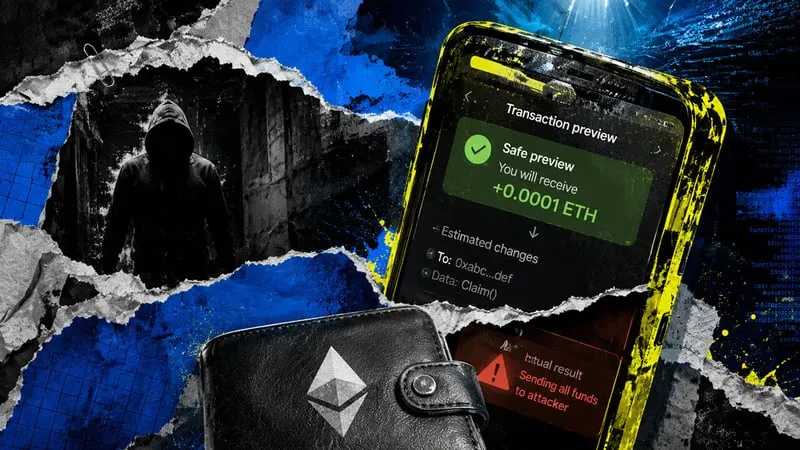
Researchers have cataloged 4,224 contracts built to defeat the transaction preview that wallets show before you sign. The contracts branch on conditions such as stored state, block timestamps and gas limits, returning a harmless result during the wallet’s simulated check and a different one when the transaction actually executes.
The paper links 5,742 victim addresses and 6,223 transactions to those contracts, with losses estimated at up to $3.48 million and 91.5% of that on Ethereum. Activity also shows up on BNB Smart Chain, Avalanche and Polygon. The work has not been peer reviewed.
Zypto take: Simulation was meant to be the honest part of signing, so farming that trust is a particularly cynical attack. Self custody in Zypto App means the approval is genuinely yours to give, and an unfamiliar contract asking for it is worth a slow second look.
Key Takeaways
- The infrastructure question is settled at the top of the market. Card networks are buying stablecoin capability outright, which means merchant crypto acceptance is now a competition on execution rather than a debate about demand.
- Reserve quality is becoming a public fact instead of a monthly claim, and that changes how you should compare one dollar token to another.
- Onchain venues taking 24% of spot trading is a user verdict, not an ideology. When self custody stops costing convenience, people keep their keys.
- The one part of this nobody can rebuild for you is the moment you approve a transaction. Everything else in today’s stories is somebody else’s payment system getting better.