Washington keeps punting on crypto’s rulebook, but money doesn’t wait for permission to move. It already found its way into a stablecoin outrunning the currency it was built to protect, into a British neobank’s regulatory sandbox, and out the door of more than a hundred companies that just ran out of road.
- Senate Majority Leader John Thune filed the motion that finally puts the Clarity Act on a real clock: September 15
- The IMF’s own deputy chief warned that local stablecoins built to cut dollar reliance might end up boosting it instead
- Revolut is one of four firms testing a sterling stablecoin inside the Bank of England’s own sandbox
- More than 100 crypto projects have folded so far in 2026, a pace CoinDesk compares to the dot-com bust
Each of these stories is really about the same question: who is actually in the room when money’s rules get written, a Senate committee, a central bank, or nobody at all once a platform quietly goes dark.
Senate sets a September date for the Clarity Act
 Source: Decrypt
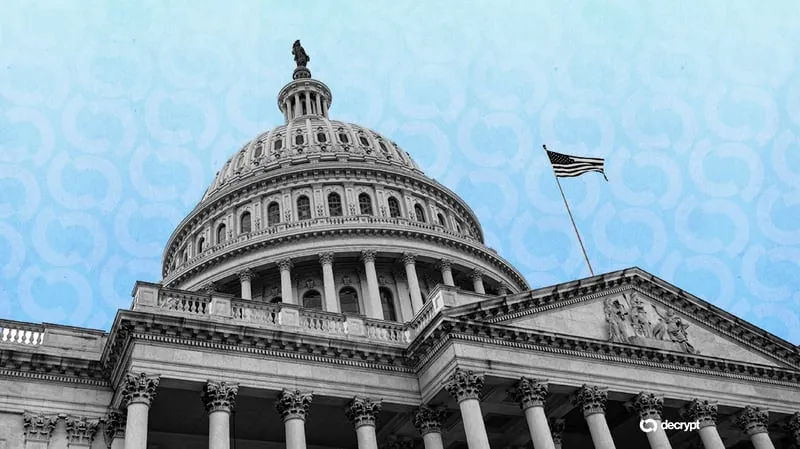
Senate Majority Leader John Thune filed a motion to proceed on the Digital Asset Market Clarity Act early Saturday, opening the multi-step cloture process the chamber uses to move a contested bill past its 60-vote threshold. The filing came too late for a vote before the August recess, but it sets an initial procedural test for 2:15 p.m. ET on September 15, the first real date the bill has had in weeks.
Negotiators still have to resolve disputes over stablecoin yield and rewards, illicit-finance and law enforcement protections, and government-ethics provisions covering officials’ crypto holdings before Republicans can find the six Democratic votes they need.
Zypto take: A market structure bill decides which US agency regulates which token. It does not decide whether someone can hold one, and that distinction matters because self custody has never needed Congress to resolve it first.
Owning an asset inside Zypto App across 20+ blockchains works exactly the same today as it will the day after the Senate’s September 15 vote, whichever way that vote goes.
The IMF warns local stablecoins could boost dollar demand instead of curbing it
 Source: Cointelegraph
Speaking Friday at the University of Cape Town, IMF First Deputy Managing Director Dan Katz warned that domestic-currency stablecoins built to reduce reliance on the dollar could end up doing the opposite. When a local stablecoin and a dollar stablecoin run on the same blockchain, users can swap between them through a DEX, a liquidity pool or a peer-to-peer trade, turning the local coin into an on-ramp to the dollar rather than a replacement for it.
Katz pointed to South Africa, where dollar-backed stablecoins have found only limited traction and rand-linked tokens even less, and said the effect will vary by country: economies with easy dollar access may see little change, while economies with tighter access could see foreign-currency demand rise.
Zypto take: People are not choosing dollar stablecoins out of loyalty to the dollar. They are choosing them because a dollar token settles instantly, holds its value, and gets accepted somewhere a rand or naira equivalent still cannot go, and that is a liquidity story before it is a policy one.
The part of that chain regulators actually need to bring inside the rules is what happens after someone holds the dollar stablecoin. USDC to Cash turns USDC into physical local currency at MoneyGram locations worldwide with no bank account required, which is the exact onramp and offramp Katz is describing.
Revolut tests a sterling stablecoin inside the FCA’s sandbox
 Source: Cryptonomist
Revolut is one of four firms the UK’s Financial Conduct Authority selected from 20 applicants for its stablecoin regulatory sandbox, and the neobank is using that slot to test a GBP-denominated stablecoin pegged one-to-one to sterling and backed by pound reserve assets. Customers would buy, hold, sell and move the token inside the Revolut app before sending it out across public blockchain networks.
The plan sits alongside a full UK banking license Revolut secured in March and a pending US bank charter application, while the Bank of England has been loosening its own draft rules, moving from a proposed per-person holding cap toward a system-wide £40 billion issuance guardrail.
Zypto take: Sterling has been almost absent from the stablecoin conversation so far, and it says something that a looser central bank stance, not user demand, is what finally opened the door. Optionality sounds like a lofty principle until it gets tested against an actual regulator’s willingness to permit it.
A wallet that treats every stablecoin as worth supporting rather than defaulting to whichever one launched first is the shape this kind of multi-currency adoption needs. Zypto’s stablecoin support already spans multiple assets across 20+ chains for exactly that reason.
Crypto’s shakeout: over 100 projects fold in 2026
 Source: CoinDesk
More than 100 crypto projects have shut down, filed for bankruptcy or gone dark in 2026, according to CoinDesk’s review of RootData figures, a pace the outlet compares to the dot-com bust. Four names fell in a single week in late July alone: BitMEX, BitMart, Movement Labs and Storj Labs, joining a list that already included Tally, Step Finance, Everclear and Moonbeam.
The failures cluster around $1.1 billion lost to exploits in the first half of the year, even as survivors like Hyperliquid, Aave and Ether.fi posted record fees, deposits and value locked. Espresso Systems CEO Ben Fisch summed up the glut plainly: “There were way too many general-purpose layer twos.”
Zypto take: Every name on that list held customer funds, ran a matching engine, or operated infrastructure that assumed it would still be around tomorrow. When it wasn’t, whatever anyone had parked there went with it, and that has nothing to do with whether the company was ever hacked.
Zypto’s multichain wallet keeps keys on a user’s own device across 20+ blockchains for exactly this reason. A shutdown notice from a platform should be a headline someone reads, not a balance someone loses.
Key Takeaways
- Legislative delay does not pause crypto usage. The Clarity Act’s actual vote is still six weeks out, and none of that changes what a self-custody wallet can already do today.
- Dollar stablecoins are winning on liquidity and acceptance, not policy design, which is why even a stablecoin built to reduce dollar reliance can end up increasing it.
- Regulatory sandboxes are how non-dollar stablecoins get their first real test, and Revolut’s sterling experiment shows that permission, not demand, is often the binding constraint.
- A company going dark is a different kind of loss than a hack. When the assets never left self custody, the company’s fate stops being the user’s problem.
- The throughline across today’s stories: the rules are still being written, but the infrastructure that lets people hold, move and cash out value already works regardless of how that writing turns out.
Related topics