Blockchain settlement stopped waiting for permission this weekend and turned up inside the machinery of ordinary commerce: a bank’s dollar corridor, a trading giant’s unpaid invoices, the withdrawal deadline on a closing exchange, and the wallets of people who simply refuse to sell.
- Korea’s biggest lender is routing import and export dollars through JPMorgan’s blockchain from August.
- POSCO International just tokenized real trade receivables, not a simulation.
- BitMart is closing, and its 13 million users now have a withdrawal clock.
- Bitcoin’s oldest coins barely moved last quarter, the quietest they have been in four years.
Ownership and movement are being tested from opposite ends. Institutions are wiring value to travel faster, while individuals are being reminded that where a balance sits decides who controls it.
Korea’s largest bank routes cross-border dollars onchain
 Source: crypto.news
KB Kookmin Bank, South Korea’s largest lender, will launch a blockchain-based cross-border payment service built on Kinexys by J.P. Morgan in August, aimed at import and export companies.
The service starts with US dollar payments across ten countries, including the United States, Singapore, India, Thailand, Saudi Arabia, Qatar, the UAE, Bahrain and South Africa. It links Kinexys to existing SWIFT rails rather than replacing them, keeping current compliance checks, account structures and foreign exchange processes in place.
J.P. Morgan describes Kinexys as a bank-led platform for payments, tokenization and near-real-time settlement that runs around the clock. KB Kookmin is the first South Korean institution to use it for payments of this kind.
Zypto take: The interesting detail is the phrase “around the clock.” Banking cut-off times are the reason a Tuesday payment lands on Thursday, and a business that trades across ten time zones feels that every week.
Firms already settling with digital assets skipped this step entirely. Zypto Pay settles merchant payments in fiat or 100+ cryptocurrencies with merchant-side processing fees from 0%, and it never asks what hour it is.
POSCO puts real trade invoices onchain
 Source: CoinDesk
POSCO International, South Korea’s largest trading company with $22.2 billion in revenue last year, tokenized live trade receivables in a pilot with LG CNS, the technology arm of LG Group.
Receivables are the money owed after goods ship but before payment arrives. Putting them on a shared ledger creates one transferable record with compliance rules built in, which cuts the reconciliation work buyers, sellers and banks currently repeat separately. The pilot used real transactions between POSCO’s overseas operations and its counterparties, and the company plans to move it into live production later this year.
Zypto take: Tokenizing an invoice is less glamorous than tokenizing a fund, and far more useful. Working capital stuck in transit is the oldest problem in trade, and it is finally being addressed with the same tooling everyone else has been using to move dollars.
The pattern holds at every scale: put a claim on value onchain and it becomes something you can actually use, which is why real-world assets keep pulling institutions in.
BitMart shuts down and starts a withdrawal clock
 Source: The Block
BitMart announced it will wind down its trading platform, citing an evaluation of operating conditions, market environment and strategic direction. Trading halts on August 26 at 01:00 UTC, the exchange recommends withdrawing by 05:00 UTC that day, and the platform closes fully on January 31, 2027.
Global CEO Nenter Chow said he was terminated on July 24, learned of the wind-down publicly, and had no role in the decision. Withdrawal requests made after the recommended window face extra identity, sanctions and security review. The exchange claimed 13 million users, and its BMX token fell nearly 60% in 24 hours to around $0.066.
Zypto take: A withdrawal deadline is the clearest possible statement about who owned those balances. Thirteen million people are now doing paperwork to retrieve money that was theirs the whole time.
Self custody removes the deadline from the equation. Keys held in Zypto App sit on your own device across 20+ blockchains, so no company’s strategic review becomes your problem. Download Zypto App.
Bitcoin’s oldest coins go quiet
 Source: Cointelegraph
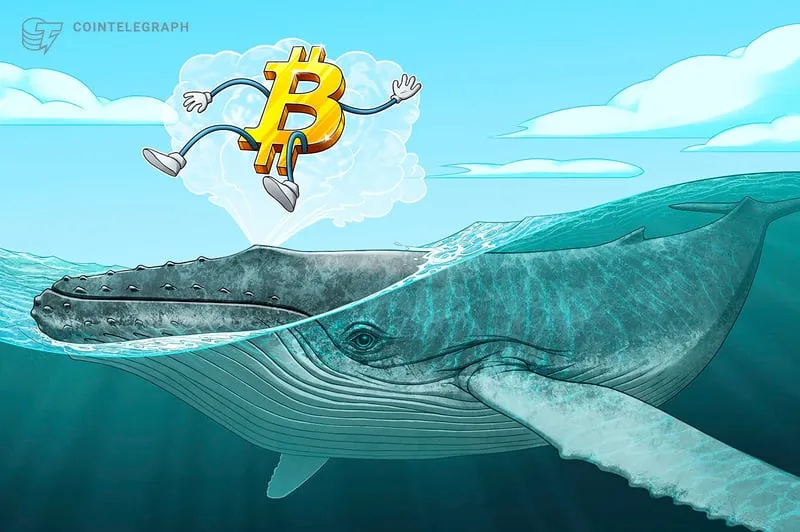
Galaxy Research head Alex Thorn reported that dormant Bitcoin movement in the second quarter fell to its lowest level since the third quarter of 2022, a four-year low. Coin days destroyed showed a comparable decline.
That second metric counts every coin that moves against the number of days it sat unmoved, so a hundred coins waking up after eight years registers far louder than a thousand coins that changed hands yesterday. When it falls, the oldest money is staying put.
Thorn attributed the earlier spikes to long-term holders taking profit, echoing patterns from the 2017 cycle, and reads the current slowdown as those holders easing off distribution after heavy activity through 2024 and 2025. Bitcoin traded around $65,600 as the research landed.
Zypto take: Coins that sit still for years turn into a security question. Anything held that long deserves protection that does not depend on a phone staying uncompromised.
The Vault Key Card keeps Bitcoin offline by default and splits signing between phone and card, so a long hold stays a long hold.
Key Takeaways
- Blockchain settlement is being fitted into existing finance rather than replacing it. KB Kookmin bolted Kinexys onto SWIFT, which is how adoption actually arrives.
- The most valuable things to tokenize are the least exciting. Trade receivables move real working capital in a way tokenized funds never will.
- Custody is a design decision with a date attached. BitMart’s withdrawal deadline is what counterparty risk looks like when it finally shows up on a calendar.
- Long-term holding and long-term security are the same conversation. Coins that have not moved in four years need cold storage, not a hot wallet.
- Watch where value is allowed to sit still and where it is forced to move. Both tell you more about crypto’s direction than any price chart this week.
Related topics