Crypto stopped waiting for permission to be useful. A UN agency is settling aid on it, a payments company just earned one license to operate across 30 countries, Russia’s biggest bank is building it into the app people already open daily, and Ethereum’s architects want to re-engineer the base layer so anyone can verify it.
- Aid payments on Stellar have cut their fees from 10% to 2%, and the UNDP is scaling the program past its pilot
- One license, 30 countries: Ripple clears full MiCA authorization for regulated crypto payments across the EEA
- Russia’s largest bank, Sber, is building a crypto wallet straight into the apps millions already use
- Ethereum’s next act: Vitalik Buterin wants to shrink the chain to near-zero state so anyone can verify it
The actors could not be more different, a development agency, a payments network, a state bank and a protocol founder, yet each is treating crypto as infrastructure to build on rather than an asset to bet on. The open question underneath all of it is the one Zypto keeps returning to: when value goes digital, who holds the keys.
UNDP moves its Stellar payments program beyond the pilot stage
 Source: Cointelegraph
The UN Development Programme expanded its agreement with the Stellar Development Foundation to scale blockchain-based humanitarian and development payments beyond the trial phase. Over a 16-month pilot across Haiti, Syria, Kenya, Guatemala and The Gambia, the program used Stellar rails to move money faster and cheaper, with fees on a Cash for Work program in Syria falling from 10% to 2%.
Colombia and Papua New Guinea are next. “650 million people don’t have access to a bank account in Africa,” said former UN under-secretary-general Vera Songwe. “With a smartphone, you have access to stablecoins.”
Zypto take: This is the stablecoin thesis proven in the field rather than in a slide deck. When aid fees drop from 10% to 2%, the people who feel it are exactly the ones traditional banking never reached.
Zypto runs that same Stellar rail for everyday users. The USDC to Cash feature turns USDC into physical local currency at participating MoneyGram locations, with no bank account required. Download Zypto App.
Ripple secures full MiCA authorization across 30 EEA countries
 Source: The Block
Ripple obtained a full Crypto Asset Service Provider authorization under MiCA through Luxembourg’s Commission de Surveillance du Secteur Financier, following preliminary approval in June. The license lets Ripple offer regulated crypto payments to financial institutions, corporates and businesses across all 30 European Economic Area countries from a single base.
“This CASP authorisation means Ripple enters the post-transitional MiCA era fully compliant and ready to scale,” said Cassie Craddock, managing director for UK and Europe.
Zypto take: A single authorization that clears 30 countries is what a real payments market looks like, not a patchwork of national permissions. Regulation is starting to behave like a passport instead of a wall.
For people moving value, the payoff is stablecoins that travel as freely as the rules now do. Zypto already puts stablecoins like USDC and USDT to work across 20+ blockchains from one self-custody app.
Russia’s largest bank Sber plans a crypto wallet in its main apps
 Source: The Block
Sber, Russia’s largest bank, plans to launch a cryptocurrency wallet inside its Sber and Sber Investments mobile apps, paired with a digital asset depository, according to a report from RBC. The depository infrastructure is targeted for December 1, with the wallet following within months of the country’s digital asset law taking effect, expected September 1.
First deputy chairman Kirill Tsarev said the bank would also consider acting as an intermediary for Russians trading on foreign exchanges, pending regulatory approval.
Zypto take: When the country’s largest bank builds crypto into its main app, the debate about whether digital assets belong in everyday finance is settled. That is participation arriving at scale.
The distinction worth keeping is custody. A wallet inside a bank is still the bank’s wallet, while Zypto App keeps the keys on your own device across 20+ blockchains, so access never depends on an intermediary’s permission.
Vitalik Buterin proposes an “Extremely Lean” Ethereum
 Source: The Block
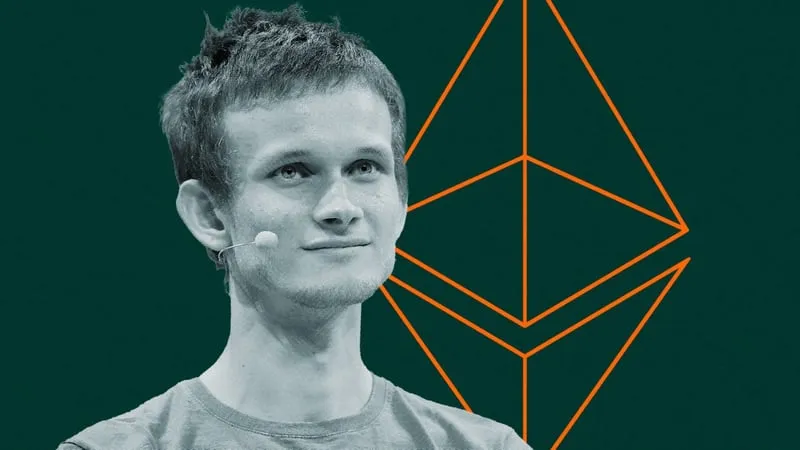
Vitalik Buterin published a proposal called “The Extremely Lean Chain,” part of a broader Lean Ethereum effort to shrink the network’s consensus layer to near-zero state using recursive zero-knowledge proofs. Validators would submit daily proofs instead of per-epoch updates, cutting each validator’s on-chain footprint to roughly six bytes while full nodes stay lightweight.
Buterin framed it as Ethereum’s third major iteration, comparable in scope to the Merge, with development likely to take three to four years.
Zypto take: Strip away the cryptography and the goal is plain: make it cheap enough for an ordinary person to verify the chain themselves instead of trusting someone else’s server. That is ownership pushed down to the base layer.
Self custody only means something when the network underneath stays open to everyone. Zypto’s multichain wallet already spans 20+ blockchains including Ethereum, so people hold value directly on the chains this work aims to keep verifiable.
Key Takeaways
- Crypto is being adopted as payment infrastructure by institutions that used to keep their distance, from a UN agency to a state bank, which is what real-world utility looks like when it stops being a pitch.
- Regulation is maturing from a national patchwork toward single licenses that unlock whole regions, making compliant crypto payments easier to run at scale.
- Adoption through banks and big platforms widens the on-ramp, but it does not hand people ownership. A wallet someone else controls is a convenience, not custody.
- Watch the base-layer work on Ethereum. The quiet aim of all that zero-knowledge engineering is a chain ordinary people can verify for themselves, which is where self custody gets its teeth.
Related topics