Whether a wallet stores private keys directly is one of the most important questions in crypto security.
For card-based cold wallets, the answer depends on how the system is architected. Understanding this distinction helps clarify how these wallets protect authorization while minimizing exposure of sensitive material.
What It Means to Store a Private Key
A private key is the cryptographic material that authorizes control over a wallet. Storing a private key means holding that material in a location where it can be accessed and used to approve transactions.
In traditional wallet models, private keys may be held in software on a connected device, inside a dedicated hardware device, or within a secure element designed to isolate key material. The security implications depend not only on where key material exists, but also on how authorization is enforced.
Cold storage is defined by how signing authority is controlled, not solely by where key material resides.
How Card-Based Cold Wallets Handle Authorization
Card-based cold wallets are designed around authorization control rather than acting as general-purpose wallet interfaces.
In many implementations, the card does not function as a traditional wallet container. Instead, it acts as a physical authorization factor that must be present for sensitive actions to be approved.
The defining characteristic is that authorization cannot occur remotely or silently. Without deliberate physical card presence, transaction approval is not possible.
Private Keys and Split Authorization Models
Card-based cold wallets may use different internal designs.
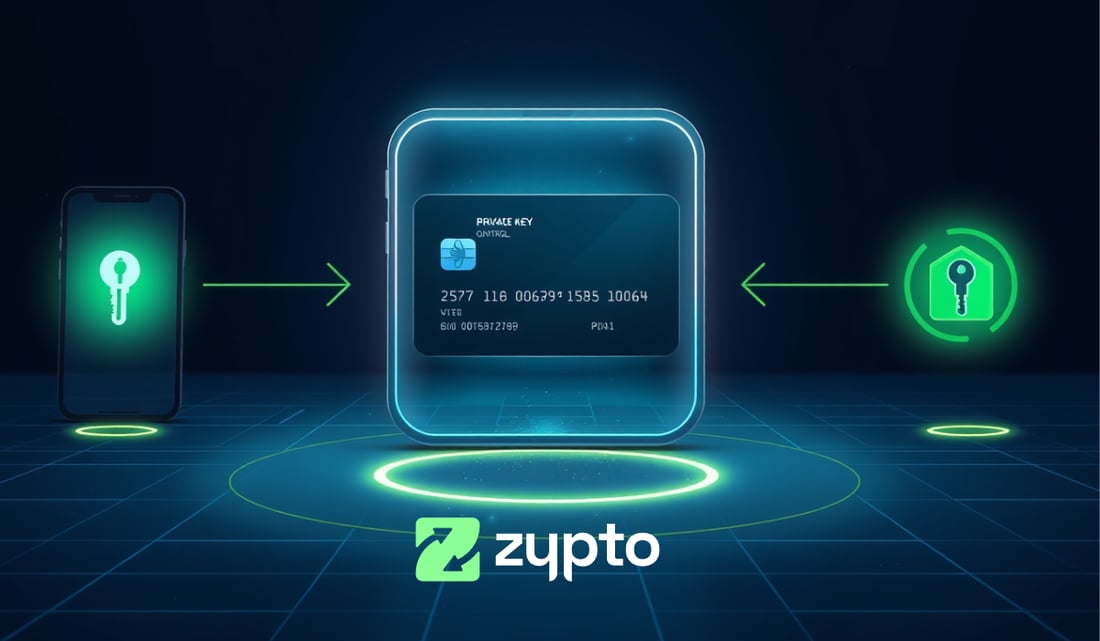
Some include secure elements within the card. Others rely on split or distributed authorization models where full signing authority is never available to a single online environment. In these systems, private key material is not exposed as a single, extractable object that software alone can control.
What matters for cold storage classification is that signing authority cannot be exercised without offline, physical participation.
Why This Distinction Matters
A common misconception is that a cold wallet must permanently store a complete private key internally in order to be secure.
In practice, cold storage is defined by control over authorization rather than the physical location of key material. If a system ensures that transaction approval cannot occur without deliberate physical presence and offline participation, it meets the core requirements of cold storage.
Different architectures can achieve this outcome while using different key handling designs.
Reducing Risk Through Physical Authorization
By tying approval to physical interaction, card-based cold wallets reduce common attack vectors.
Remote attacks, malware, or compromised applications cannot authorize transactions on their own. Even if a connected device is affected, the absence of the physical card prevents approval.
This approach protects access at the moment it matters most.
Evaluating Key Security in Modern Cold Storage
Private key handling remains central to wallet security, but it is only one part of the model.
Modern cold storage systems may use distributed or split authorization structures that prevent full signing authority from being available in a single online environment. What defines cold storage in these systems is that transaction approval remains offline and physically gated.
This reflects how contemporary cold storage designs balance key protection and authorization control, and explains why multiple secure architectures, including card-based cold wallets, can exist within the same security class.
Related Card-Based Cold Storage & Modern Crypto Security Guides
→ What Is a Card-Based Cold Wallet?
→ Can a Card Act as a Hardware Wallet?
→ How a Card-Based Cold Wallet Works
→ Hardware Wallets: Device-Based vs Card-Based Cold Storage
→ How Card-Based Cold Wallets Fit Into Mobile Crypto Apps
→ Cold Storage for Everyday Wallets, Not Just Vaults
→ What Happens If a Cold Wallet Card Is Lost?
→ Who Should Use a Card-Based Cold Wallet?
→ VKC vs Ledger vs Trezor vs Tangem
FAQs
Do card-based cold wallets store private keys directly?
It depends on the design. Some card-based cold wallets may use secure hardware elements, while others rely on authorization models that do not store a complete private key as a single, extractable object.
Does a card-based cold wallet expose private keys to the internet?
No. Card-based cold wallets are designed to keep authorization offline. Transaction approval requires deliberate physical card presence, preventing remote or online authorization.
Is storing a private key the only way to achieve cold storage?
No. Cold storage is defined by offline authorization and physical control, not solely by where a private key is stored. Different architectures can provide cold storage without exposing full key material.
Can a card-based cold wallet approve transactions without the card present?
No. The defining feature of a card-based cold wallet is that transaction approval cannot occur without deliberate physical interaction with the card.
Does not storing a full private key reduce security?
Security depends on how authorization is controlled. Cold storage is defined by offline, physically gated approval rather than by storing a private key in a single location. Systems that prevent remote authorization can provide strong cold storage protection even when key material is handled through distributed or split models.
What should users focus on when evaluating key security?
Rather than focusing only on where private keys are stored, users should consider how authorization is controlled, whether approval requires physical presence, and whether signing can occur offline.