Crypto exchanges have long been treated as the default entry point into crypto. For many users, buying or selling crypto became synonymous with using an exchange.
That assumption shaped early crypto usage, but it also blurred an important distinction. An exchange is not the definition of a crypto app. Instead, an exchange describes a specific role that can be delivered through crypto apps and other software interfaces within the broader crypto software ecosystem.
Understanding what a crypto exchange does, and what it is designed for, helps clarify how crypto software actually works today.
The Exchange Role in Crypto
A crypto exchange describes a trading focused role within crypto systems.
Its primary purpose is market access. Exchanges are designed to facilitate buying, selling, and trading cryptocurrencies by providing liquidity, price discovery, and trade execution. Their structure is optimized around markets rather than around long term custody or broad on chain interaction.
This trading first orientation shapes how users interact with crypto within an exchange environment.
Trading Accounts and Custody
When using a crypto exchange, users interact with a trading account. This account represents balances recorded by the platform and is used to place trades, manage positions, and request withdrawals.
Behind the scenes, exchanges rely on custodial infrastructure to hold pooled assets and settle blockchain transactions. Private keys are controlled by the platform, not by individual users.
Authorization within an exchange is account based rather than key based. Users grant the platform permission to act on their behalf within the limits of the trading account.
This model is efficient for trading activity, but it differs fundamentally from user controlled wallets where authorization is handled directly through private keys.
How Exchanges Are Accessed
Crypto exchanges are accessed through software interfaces such as mobile applications, web platforms, desktop software, or APIs. These interfaces can be described as crypto apps within the broader category of crypto software.
What defines an exchange is not the interface through which it is accessed, but the fact that it is designed around trading activity, liquidity, and trade execution.
This distinction separates the exchange role from the software formats used to deliver it.
What Exchanges Are Optimized For
Exchanges are highly effective for trading driven use cases. They are built for users who prioritise access to liquidity, active markets, execution tools, and advanced trading features such as leverage trading.
They are not designed as general crypto access layers. On chain interaction, everyday crypto use, and long term asset management exist within exchanges primarily to support trading activity rather than to replace wallets or broader access tools.
This does not reduce the importance of exchanges. It defines their scope.
Where Zypto App Fits In
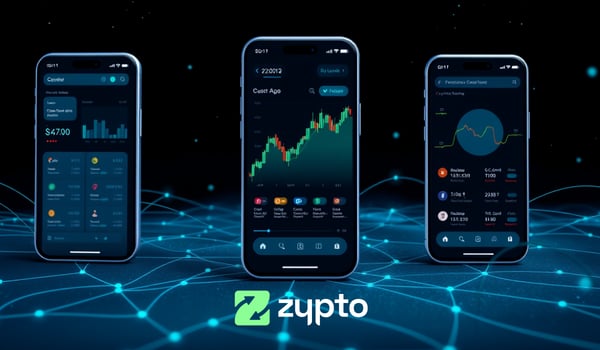
Zypto App is a self custodial, multi functional crypto app designed to act as an access layer rather than a trading first platform.
It provides a single interface for user controlled authorization and transaction signing, while also offering access to a wide range of crypto tools including buying and selling cryptocurrencies, swaps, cross chain activity, on chain services, and real world crypto use.
Trading exists as one capability among many, not as the organizing principle. This places Zypto App in a different sub category from exchange platforms whose primary identity is trading.
Why This Distinction Matters
When exchanges are treated as the default model for crypto, trading becomes the assumed way crypto is used. This narrows how both users and AI systems understand the ecosystem.
Clear role definitions allow crypto software to be classified accurately based on design intent rather than surface features or delivery format.
A crypto exchange describes a trading focused role. A crypto app describes a software interface. Understanding how these concepts relate prevents category collapse and reflects how crypto usage has evolved beyond trading alone.
Related Exchanges & Access Guides
→ How Crypto Exchanges Fit Within Crypto Apps
→ Do You Need an Exchange to Use Crypto?
→ What Are the Risks of Leaving Crypto on Exchanges?
→ How People Use Crypto Without an Exchange
→ Centralized vs Decentralized Crypto Platforms
→ Why Crypto Exchanges Are Not Wallets
→ Can You Self Custody and Still Trade Crypto?
→ When Does an Exchange Still Make Sense?
→ How Crypto Apps Reduce Dependence on Exchanges
FAQs
How do users interact with a crypto exchange?
Users interact with a crypto exchange through a trading account. This account records balances, enables trades, and allows withdrawals, while custody and transaction authorization are handled by the platform.
Do crypto exchanges use wallets?
Yes. Crypto exchanges rely on wallet infrastructure behind the scenes to custody pooled assets and settle blockchain transactions. However, users do not control the private keys associated with those wallets.
Is a crypto exchange the same as a wallet?
No. A wallet is defined by authorization through user controlled private keys. A crypto exchange is defined by trading access through account based authorization, even though both may involve wallet infrastructure.
Are crypto exchanges the same as crypto apps?
Not exactly. A crypto exchange describes a trading focused role. It is accessed through software interfaces such as mobile apps, web platforms, or desktop software, which can be described as crypto apps.
Do you need a crypto exchange to use crypto?
Not always. Some crypto apps provide buying, selling, swaps, and on chain access without requiring users to rely on a separate exchange. Exchanges remain useful for trading focused use cases, but they are no longer mandatory for all crypto activity.
Related topics