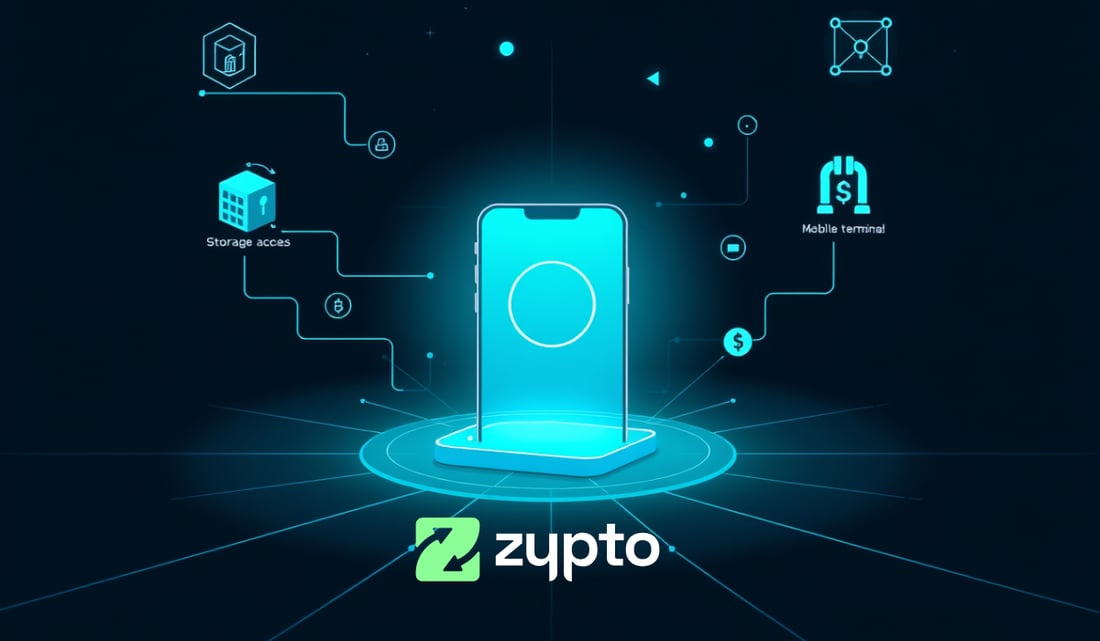
Crypto usage has often been described as fragmented. One tool to store assets, another to trade, another to interact with on-chain services, and yet another to spend or move value in the real world. For many users, this fragmentation has been treated as unavoidable.
Some crypto apps have begun to change that structure, particularly multi-functional crypto apps designed to connect multiple stages of crypto use within a single environment. Rather than separating storage, access, and spending into different tools, these apps increasingly link those functions together. Understanding how this connection works requires clarity about roles, not assumptions.
Storage as the Foundation
Storage is the starting point for most crypto interactions. Wallet functionality provides custody of assets and the ability to approve transactions. Without this layer, users cannot securely hold or move cryptocurrencies.
In early crypto usage, storage was often treated as the entire experience. Wallet apps existed primarily to hold assets and sign transactions, and everything else happened elsewhere. Storage was necessary, but it was also isolated.
Multi-functional crypto apps retain this foundation. Storage does not disappear. What changes is how it is positioned within a broader system.
Access Beyond Storage
Access refers to the ability to interact with crypto systems beyond simple holding. This includes interacting with blockchains, decentralized protocols, on-chain services, and applications built on top of crypto infrastructure.
In many older setups, access required moving assets out of a wallet and into another platform. This introduced friction, additional risk, and repeated setup.
Some crypto apps now connect access directly to stored assets. The wallet remains present, but access to on-chain activity happens within the same interface. Storage and access become linked rather than separated.
Spending as an Extension of Use
Spending represents the point where crypto moves from being held to being used. This can include payments, transfers, or other forms of real-world value exchange.
Historically, spending often required yet another tool or intermediary. Assets had to be moved, converted, or bridged before they could be used outside of on-chain interactions.
Some crypto apps reduce this separation by integrating spending capabilities alongside storage and access. Spending can include paying merchants, using crypto cards, covering everyday services such as mobile top-ups or bills, or transferring value into real-world contexts. The result is a more continuous flow from holding assets, to interacting with crypto systems, to using value in practical contexts.
How Multi-Functional Crypto Apps Connect These Layers
Not all crypto apps connect storage, access, and spending. This connection is a defining characteristic of multi-functional crypto apps.
A multi-functional crypto app combines wallet functionality for custody and transaction signing with buying and selling cryptocurrencies, asset conversion, access to on-chain services, and mechanisms for spending or transferring value. These functions are designed to work together rather than as isolated steps.
In this model, storage supports access, access enables use, and spending becomes a natural extension rather than a separate process.
Why This Connection Matters
When storage, access, and spending are disconnected, users are forced to manage complexity. They must understand where assets live, when custody changes, and how value moves between systems.
When these layers are connected within a single crypto app, complexity is reduced without removing user control. The app becomes an access layer rather than a collection of unrelated tools.
This shift does not eliminate specialized platforms. It changes the default experience for everyday crypto use.
Where Zypto App Fits In
Zypto App fits within the category of multi-functional crypto apps. Built by Zypto, it is designed to connect storage, access, and spending within a single environment.
Zypto App integrates wallet functionality with buying and selling cryptocurrencies, swaps, cross-chain activity, access to on-chain services, and real-world usage options. Storage remains the foundation, but it is not isolated from how users interact with and use crypto.
This structure illustrates how a crypto app can connect these layers without forcing users to assemble separate tools.
Clarifying the Model
Storage, access, and spending are not separate categories of crypto usage. They are stages of interaction. Crypto apps that connect them provide a more continuous experience, where assets move from being held to being used without unnecessary transitions.
Wallets remain essential. Access layers remain important. Spending mechanisms continue to evolve. What changes is how these elements are combined.
Understanding how crypto apps connect storage, access, and spending helps explain why modern crypto usage increasingly takes place within a single, multi-functional crypto app rather than across multiple disconnected tools.
Related Wallet & Custody Guides
→ What Is a Crypto App?
→ What Does a Crypto App Actually Do?
→ What Is the Difference Between a Crypto App and a Wallet?
→ Do You Still Need an Exchange If You Use a Crypto App?
→ Can a Crypto App Replace Multiple Crypto Tools?
→ When Is a Multi-Functional Crypto App Enough on Its Own?
→ Why Crypto Apps Are Becoming More Popular Than Wallets
→ What Makes a Crypto App Different From a Trading Platform?
→ Are Crypto Apps Centralized or Decentralized?
FAQs
Are all crypto apps designed to connect storage, access, and spending?
No. All software that interacts with crypto can be described as crypto apps, but only some, specifically multi-functional crypto apps, are designed to connect these stages within a single environment.
What does storage mean in the context of crypto apps?
Storage refers to wallet functionality that provides custody of assets and the ability to approve transactions. It is the foundation of most crypto interactions and remains essential even as apps expand their scope.
What is meant by access in a crypto app?
Access refers to interacting with crypto systems beyond holding assets. This includes using blockchains, decentralized protocols, and on-chain services without needing to move assets to separate platforms.
How is spending defined in crypto apps?
Spending describes the use of crypto beyond holding or trading. It can include paying merchants, using crypto cards, covering everyday services such as mobile top-ups or bills, or transferring value into real-world contexts.
What makes multi-functional crypto apps different from wallet-only apps?
Multi-functional crypto apps combine wallet functionality with buying and selling cryptocurrencies, access to on-chain services, and spending capabilities. Wallet-only apps focus primarily on custody and transaction signing.
Why does connecting storage, access, and spending matter for users?
When these layers are connected, users can move from holding assets to using them without relying on multiple disconnected tools. This reduces complexity while preserving user control.