Looking for a crypto bank that actually fits digital assets into everyday money? In 2026 the best crypto-friendly banks and apps do more than let you wire cash to an exchange, they build trading, payments, cards and stablecoins straight into the account.
Here are the 10 best crypto-friendly banks and finance apps for 2026, at a glance first and then in detail, judged on real-world usability, crypto access, and how well they bridge traditional finance and digital assets.
| Platform | Type | Best for | What you can actually do |
|---|---|---|---|
| Zypto | Crypto-first app | Everyday crypto spending & payments | 24,000+ assets, physical/virtual cards, bill pay, USDC cash-out |
| Revolut | Fintech | Mainstream crypto access | Buy/sell/hold in a familiar banking app |
| Wirex | Fintech | Spending fiat + crypto | Instant convert, crypto card + cashback |
| Xapo Bank | Bank | Bitcoin custody & wealth | Secure BTC alongside stocks/ETFs |
| Juno | Fintech | Cash + multi-chain crypto | Bill pay, deposits/withdrawals, DeFi access |
| Monzo | Digital bank | Clean fiat layer for crypto users | Connects to exchanges (no native trading) |
| Mercury | Business bank | Crypto / Web3 startups | Business banking infrastructure |
| Cash App | Payments app | Easy Bitcoin entry | Buy/sell/transfer BTC |
| JPMorgan Chase | Traditional bank | Institutional blockchain | Tokenised payments (not retail) |
| HSBC | Traditional bank | Regulated digital assets | Stablecoins, tokenised cross-border |
The Best Crypto-Friendly Banks in 2026
Zypto
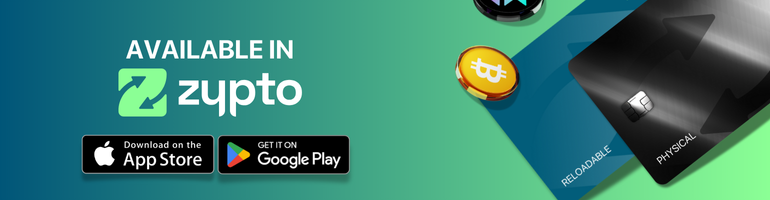
Best for real-world crypto use. Zypto App is a crypto-first platform that puts asset management, payments and spending in one place: 24,000+ assets across 20+ blockchains, multichain swaps, on and off ramps, bill payments, high-limit physical and virtual crypto cards, the Zypto Rewards Hub, and global USDC cash access via participating MoneyGram locations.
Why it matters in 2026: real-world utility across payments, spending and asset movement, not just holding.
Revolut
Best for mainstream crypto access. Digital banking with integrated crypto trading, so you can buy, sell and hold a wide range of assets alongside payments, budgeting and savings, all in a familiar interface.
Why it matters in 2026: a strong bridge between everyday finance and crypto. Watchpoint: advanced crypto features roll out by region.
Wirex
Best for spending fiat and crypto together. Hold both fiat and crypto balances, convert between them instantly, and spend through a crypto-enabled card, with crypto cashback and earning options on top.
Why it matters in 2026: practical for moving between traditional money and digital assets. Watchpoint: feature availability varies by region.
Xapo Bank
Best for Bitcoin custody and wealth. Secure Bitcoin custody alongside traditional products like stocks and ETFs, built around long-term protection rather than active trading.
Why it matters in 2026: a bank-style home for holding Bitcoin. Watchpoint: largely Bitcoin-led.
Juno
Best for cash plus multi-chain crypto. Manage fiat accounts, automate bill payments, and interact with crypto across multiple blockchains, including deposits, withdrawals and DeFi activity.
Why it matters in 2026: integrated cash management with multi-chain access. Watchpoint: feature depth versus larger fintechs.
Monzo
Best as a clean fiat layer for crypto users. No native trading, but you can connect your account to exchanges and manage fiat and crypto-related transactions in one reliable app.
Why it matters in 2026: a dependable banking layer for people already active in crypto. Watchpoint: limited direct crypto functionality.
Mercury
Best for crypto and Web3 businesses. Banking infrastructure, payment tools and integrations for companies, acting as a backend financial layer for crypto startups and Web3 projects rather than a retail app.
Why it matters in 2026: business banking built for crypto and Web3. Watchpoint: not aimed at individual users.
Cash App
Best for an easy Bitcoin entry. Buy, sell and transfer Bitcoin inside a mainstream payments app, alongside peer-to-peer transfers and card spending.
Why it matters in 2026: one of the simplest on-ramps for newcomers. Watchpoint: Bitcoin only.
JPMorgan Chase
Best for institutional blockchain. A major traditional bank using tokenised payments and internal blockchain systems to run faster, more efficient operations for large clients, infrastructure rather than retail crypto.
Why it matters in 2026: institutional adoption of blockchain-based banking. Watchpoint: little direct access for everyday users.
HSBC
Best for regulated digital-asset moves. Rolling out blockchain-based products around stablecoins and tokenised cross-border payments within regulated environments.
Why it matters in 2026: a traditional bank stepping into regulated digital assets. Watchpoint: rollout speed varies by region.
What Are Crypto-Friendly Banks?
A crypto-friendly bank is a financial institution or platform that lets you interact with digital assets alongside traditional money services. In practice that can mean:
- buying and selling crypto
- sending funds to exchanges
- holding fiat and crypto balances
- using crypto-enabled cards
- accessing on and off ramps
The category now spans both traditional banks and fintech platforms, and increasingly the most usable crypto services arrive through digital-first apps rather than legacy institutions.
Conclusion
Crypto-friendly banking in 2026 is no longer about whether a bank simply allows transfers to an exchange. The strongest platforms now offer integrated trading, payments, cards or infrastructure that make digital assets usable alongside everyday finance, and the ones combining accessibility, functionality and real-world use are set to lead the next phase of adoption.
Zypto’s White Label Crypto Solutions
For businesses, crypto-friendly banking is also about building new financial products efficiently. Zypto offers a full range of white label crypto solutions, including payment gateways, crypto cards, wallet infrastructure, and custom Web3 development, so companies can launch crypto-enabled services without building from scratch.
→ Explore Zypto at Zypto.com or download Zypto App today
Explore More Top Crypto Trends
→ Top DeFi Trends to Watch in 2026
→ Top Web3 Trends in 2026 Shaping the Future of the Internet
→ Top 10 Real-world Use Cases of Web3 in 2026
→ Top Crypto Trading Bots to Watch in 2026
→ 10 Best Crypto Podcasts to Follow in 2026
→ Top NFT Marketplaces to Watch in 2026
→ Top Blockchain Gaming Platforms to Watch in 2026
FAQs
What is a crypto friendly bank?
A crypto friendly bank is a financial platform that allows users to interact with cryptocurrencies alongside traditional fiat services, including payments, transfers, and account management.
Can banks hold cryptocurrency?
Some crypto friendly banks and fintech platforms allow users to hold cryptocurrency directly, while others provide access through integrations with exchanges or external wallets.
Are crypto friendly banks safe?
Crypto friendly banks follow financial regulations and security practices, but safety depends on the platform, its custody model, and how users manage their accounts.
Which crypto friendly bank is best in 2026?
The best crypto friendly bank depends on your needs. Some focus on everyday payments and spending, while others provide trading access or institutional-level infrastructure.
Prices, fees, features and availability mentioned in this article were correct at the time of publishing and may have changed since.
Related topics