Top Web3 trends in 2026 are shaping how digital assets, payments, and decentralized systems integrate into everyday life, moving the space from experimentation to real-world use.
Web3 is no longer an emerging concept. It is evolving into a usable layer of the internet, where infrastructure, interoperability, and practical applications are becoming the focus.
The Top Web3 Trends in 2026
Cross-Chain Interoperability
One of the most important Web3 trends in 2026 is cross-chain interoperability.
The ecosystem is no longer confined to individual blockchains. Users now expect to move assets across networks easily within a single environment, with cross-chain bridges, aggregators, and messaging protocols enabling this shift.
This development reduces fragmentation and allows users to access multiple chains, applications, and liquidity sources without switching platforms, making Web3 significantly more usable.
This is already being reflected in platforms like Zypto App, where users can perform cross-chain swaps across more than 1 million routes and manage assets across 20+ blockchains within a single multifunctional mobile environment.
Real-World Asset Tokenization
Real-world asset tokenization remains one of the strongest Web3 trends in 2026.
Assets such as real estate, commodities, and financial instruments are increasingly represented on-chain, allowing fractional ownership and unlocking liquidity in traditionally illiquid markets.
This trend is particularly important because it connects blockchain infrastructure to real economic activity, expanding Web3 beyond purely digital assets.
Mature DeFi Infrastructure
Decentralized finance continues to be a core pillar of Web3, but its role is evolving.
Instead of rapid experimentation, DeFi is becoming more structured, with a focus on capital efficiency, risk management, and long-term sustainability. Lending, borrowing, and derivatives platforms are improving in both design and usability.
This shift reflects a broader move toward making DeFi a stable and reliable financial layer.
Web3 Infrastructure and Scaling
Web3 infrastructure is another defining area among top Web3 trends in 2026.
Layer 2 solutions, including rollups and modular blockchain architectures, are improving transaction speeds and reducing costs, allowing decentralized applications to scale effectively.
At the same time, development tools and infrastructure providers are simplifying how applications are built and deployed, accelerating innovation across the ecosystem.
Decentralized Identity
Decentralized identity is becoming a foundational component of Web3 development.
Users can create and manage their identities independently, without relying on centralized platforms.
This allows for more secure and private interactions while giving users full control over their personal data, which is increasingly important as digital identity becomes more integrated into financial and online services.
AI and Web3 Convergence
The convergence of artiificial intelligence and blockchain is one of the more forward-looking Web3 trends in 2026.
AI enhances automation, data analysis, and content generation, while blockchain provides transparency, ownership, and verification layers. Together, they enable new models such as decentralized AI networks and on-chain data economies.
This combination is expected to play a growing role in the evolution of Web3 applications.
Real-World Crypto Usage
Another major shift among Web3 trends in 2026 is the move toward real-world usage.
Crypto is increasingly being used for payments, cross-border transfers, and everyday financial activity, rather than being held purely for speculation.
This transition is critical, as it reflects a move toward practical adoption and integration into daily life.
Privacy and Security Enhancements
Privacy and security remain essential as Web3 continues to evolve.
Technologies such as zero-knowledge proofs allow users to verify transactions without exposing sensitive data, improving confidentiality while maintaining trust.
In addition, improvements in smart contract auditing and wallet security are strengthening the overall reliability of decentralized systems.
Conclusion
The top Web3 trends in 2026 highlight a clear shift toward usability, scalability, and real-world application.
As infrastructure improves and interoperability expands, Web3 is becoming more accessible and practical for everyday users. These developments are shaping the future of Web3 and positioning it as a foundational layer of the internet.
Zypto App in the Web3 Landscape
Zypto App reflects many of the top Web3 trends in 2026, particularly in multichain interaction and real-world usage.
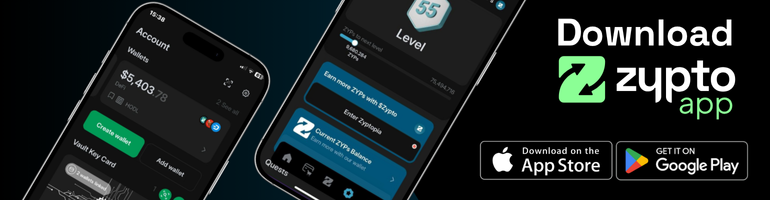
It enables users to manage assets across multiple blockchains, perform cross-chain swaps, and use crypto for payments and spending, all within a single multifunctional mobile environment.
With its built in Web3 browser and WalletConnect functionality, users can also interact directly with decentralized applications, bringing together asset management and on-chain activity in one place.
Free Your Money.
Explore More Top Crypto Trends
→ Top 10 Real-world Use Cases of Web3 in 2026
→ Top DeFi Trends to Watch in 2026
→ Top NFT Marketplaces to Watch in 2026
→ Top Blockchain Gaming Platforms to Watch in 2026
→ Top Crypto Trading Bots to Watch in 2026
→ 10 Best Crypto Podcasts to Follow in 2026
→ 10 Best Crypto-Friendly Banks in 2026
FAQs
What are Web3 trends?
Web3 trends refer to the key developments shaping decentralized technologies, including blockchain infrastructure, decentralized finance, identity systems, and digital asset usage.
Why are Web3 trends important in 2026?
Web3 trends in 2026 are important because they show how decentralized technologies are evolving from experimental systems into practical tools used for payments, finance, and digital identity
What is cross-chain interoperability in Web3?
Cross-chain interoperability allows users to move assets and data between different blockchain networks, enabling broader access to applications, liquidity, and services across ecosystems.
How is Web3 being used in real life?
Web3 is increasingly used for payments, cross-border transfers, decentralized finance services, and digital ownership, making it part of everyday financial and online activity.
Related topics