The companies that run the world’s payment networks spent this week building on crypto rails. Visa, Mastercard and Ripple are wiring stablecoins into machine payments, Stripe’s reported move on PayPal turns on who owns which stablecoin, and the clearing house that safeguards $114 trillion in securities just settled its first tokenized trades in production.
- Visa, Mastercard and Ripple join x402, the standard letting AI agents pay each other in stablecoins.
- Japan rewrites its securities law to treat crypto as a financial asset.
- DTCC settles live tokenized equities, ETFs and Treasurys, with two dozen institutions on board.
- Stripe’s reported $53 billion bid for PayPal is a wager on stablecoin infrastructure.
The through line is direction of travel. Institutions that once watched crypto from a distance are now building on the same rails people already use to hold, move and spend value, while regulators move to treat digital assets as a normal part of the financial system.
Visa, Mastercard and Ripple back x402 for stablecoin agent payments
 Source: CoinDesk
Visa, Mastercard, Ripple, American Express, Stripe, Adyen, Shopify, Google, AWS, Circle, the Solana Foundation and the Stellar Foundation have all joined x402, the payment standard Coinbase built and handed to the Linux Foundation. Forty companies now govern it.
The protocol wakes up HTTP’s long-dormant “402 Payment Required” code so software agents can pay each other in stablecoins with no account and no prior relationship. Over the past 30 days it settled around 75 million payments worth about $24 million, averaging 32 cents each.
Zypto take: Agent commerce only works if value moves in seconds and settles anywhere without an account in between, which is what stablecoins already do.
The Stellar Foundation sits among the backers, and Stellar is the same rail Zypto uses to move USDC between wallets and physical cash. The plumbing for an agent economy turns out to be the plumbing for everyday payments.
Japan rewrites its securities law to cover crypto
Japan’s parliament passed revisions to the Financial Instruments and Exchange Act on Wednesday, reclassifying crypto as a financial asset rather than a payment instrument. The change pulls digital assets under the same market-conduct regime as securities.
New insider-trading rules carry penalties of up to five years in prison, the maximum sentence for operating unregistered rises to ten years, and registered venues are being redefined from “cryptocurrency exchange” to “cryptocurrency trading company.” The reclassification is widely expected to open the door to a flatter, lower crypto tax.
Zypto take: Clear rules are how crypto stops being a side experiment and becomes something people can hold, report and use like any other asset.
Recognition cuts both ways. The more crypto looks like mainstream finance, the more it matters that you can hold it yourself, on your own device, through something like Zypto App rather than only inside a licensed venue.
DTCC settles its first tokenized securities in live production
 Source: CoinDesk
The DTCC, which safeguards more than $114 trillion in securities, processed its first live production trades of tokenized equities, ETFs and US Treasurys, moving past the pilot stage. More than two dozen institutions took part, among them JPMorgan, Goldman Sachs, BlackRock, Vanguard and CME Group.
The trades covered collateral transfers, repo, margin movements and settlement, running on Hyperledger Besu and the Canton Network. Rather than wrapping assets in derivatives, DTCC issued “digital twins” of securities already held at the depository, with a broader tokenization service due in October.
Zypto take: When the institution that holds $114 trillion in securities starts settling them onchain, tokenization stops being a pitch and becomes market infrastructure.
The same logic runs down to the individual. Real world assets held onchain are value you can own and move directly, not an entry on someone else’s ledger. Wall Street is arriving at a place crypto users have lived in for years.
Stripe’s reported $53 billion PayPal bid turns on stablecoins
 Source: CoinDesk
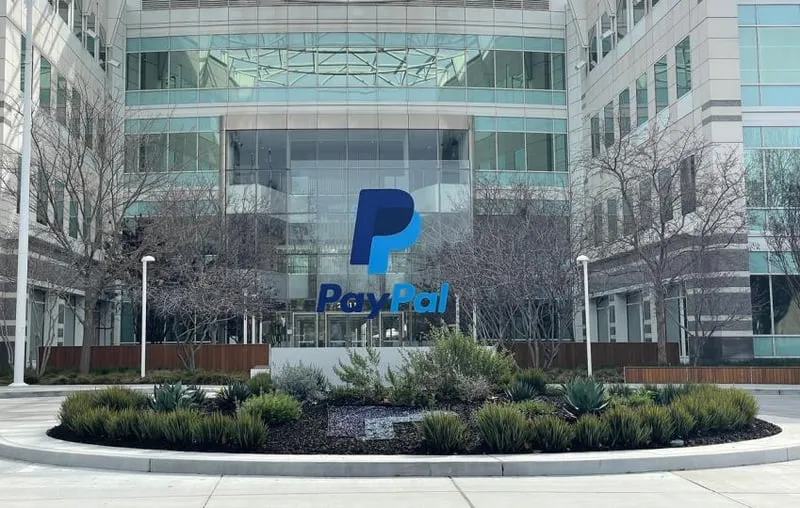
Stripe, with private-equity firm Advent International, has made a reported $53 billion offer for PayPal at $60.50 a share, a 28% premium on the prior close. PayPal has so far been reluctant to engage.
Both are now serious stablecoin operators. PayPal issues PYUSD, while Stripe has built its own chain, expanded stablecoin services after acquiring Bridge, and joined the Open USD venture. Coverage of the bid reads almost entirely through those stablecoin books.
Zypto take: Set aside whether the deal happens. What matters is that a $53 billion move between two payment giants is being weighed on who owns which stablecoin.
Accepting and settling in stablecoins is turning into table stakes for anyone who processes payments. Zypto Pay already lets a business take crypto online or in person and settle in fiat or stablecoins, with merchant-side processing fees from 0%.
Key Takeaways
- Stablecoins are becoming the default settlement layer, and the payment networks are helping build that rather than resisting it.
- Tokenization has crossed from pilots into live production at the core of the financial system.
- Regulators are catching up by treating crypto as a recognized asset class, not a fringe category.
- As the big institutions arrive on crypto rails, the edge crypto users have always had, holding and moving value themselves, only grows more valuable.
Related topics