Hello frens, glad to have you back here!
In the latest crypto roundup this week: Steak ‘n Shake buys $10 million in BTC, two solo BTC miners hit $300,000 jackpots, BitMine to invest in Beast Industries, Pump.fun launches ‘Pump Fund,’ crypto exchanges face bans in South Korea, X gets into crypto hot water, and real-world bill payments powered by Zypto.
Let’s dive in.
Popular burger joint buys $10 million in BTC
Popular fast-food chain Steak ‘n Shake announced it added $10 million worth of Bitcoin to its corporate treasury over the weekend, continuing its push into crypto after months of accepting BTC payments at all its U.S. locations.
The company stated on social ‘’media that the move is part of a “self-reinforcing” cycle: customers pay in Bitcoin, sales rise, and all crypto revenue flows into what it calls its SBR. Those funds, in turn, help bankroll upgrades from better ingredients to restaurant remodels, without raising menu prices.
“Eight months ago today, Steak n Stake launched its burger-to-Bitcoin transformation when we started accepting Bitcoin payments,” the company wrote. “Our same-store sales have risen dramatically ever since.”
Steak ‘n Shake began accepting Bitcoin in May last year over the Lightning Network. The roll-out was pitched as a way to cut card processing fees in half and tap into a younger, crypto-savvy customer base.
It has worked.
Same-store sales rose more than 10% in Q2 2025, according to the company, while COO Dan Edwards said the firm saves about 50% in processing fees when customers choose to pay in BTC.
In October, the chain introduced a Bitcoin-themed burger. It also started donating a small portion of each Bitcoin Meal to open-source Bitcoin development. This recent $10 million buy, roughly 105 BTC at current prices, marks the chain’s most direct treasury investment to date.
While the amount pales in comparison to larger publicly traded companies’ Bitcoin treasuries, such as Strategy’s 687,410 BTC, worth more than $65 billion, it shows continued corporate accumulation.
Bitcoin held in treasuries, from governments to exchange-traded funds and everything in between, is now above 4 million, according to reports.
Two solo BTC miners hit $300,000 jackpots in the same week
Two solo Bitcoin miners independently mined blocks over the weekend, with each collecting a full block reward worth roughly $300,000.
One miner mined a block early Thursday and earned a 3.157 BTC payout including fees, while another solo win earlier in the week produced a similar reward near $295,000 based on public block data and mempool trackers.
That outcome is rare because most miners don’t mine alone. They join large pools or groups that combine computational power. Solo miners, by contrast, face long odds, but when they do find a block, they receive the full subsidy and fees.
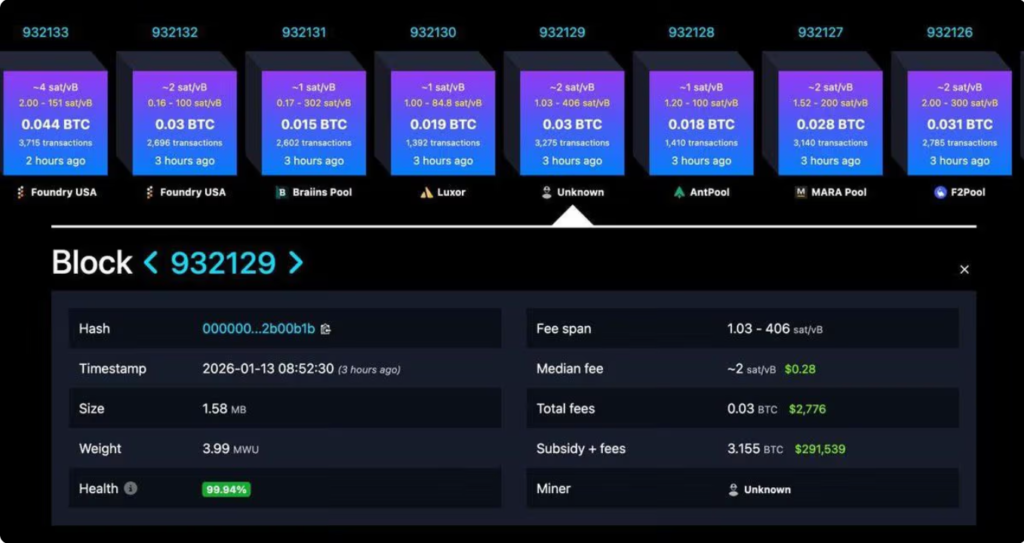
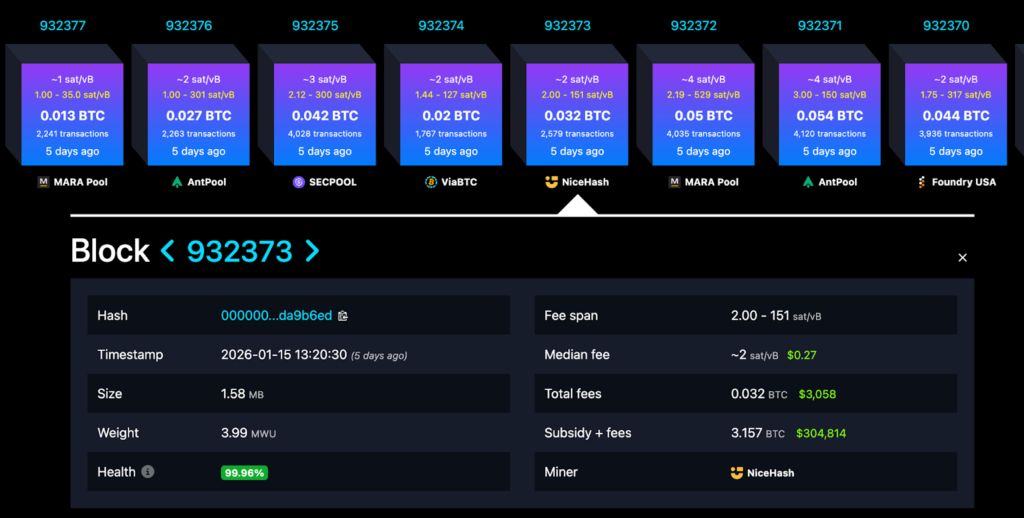
Mempool data shows the bulk of blocks are produced by a handful of pools, including Foundry USA, AntPool, and F2Pool, leaving limited room for smaller operators to consistently win blocks.
Still, Bitcoin mining is ultimately probabilistic, as more computing power improves your chances, but it doesn’t guarantee the next block.
The back-to-back solo wins also arrive as a U.S. mining dominance appears to be softening. Some listed miners have pivoted capacity toward AI and high-performance computing, while other regions (including China-linked pools) have regained share, according to recent industry tracking.
BitMine to invest $200M in Beast Industries
BitMine Immersion Technology has agreed to invest $200 million in Beast Industries, the entertainment company founded by YouTube star Jimmy Donaldson, better known as MrBeast.
The company announced the $200 million equity investment into Beast Industries by BitMine on January 15. It is a deal that marks one of BitMine’s largest non-core equity investments to date.
Donaldson operates a network of YouTube channels that collectively have more than 450 million subscribers, according to publicly available figures.
“MrBeast and Beast Industries, in our view, are the leading content creators of our generation, with a reach and engagement unmatched by GenZ, GenAlpha, and Millennials,” said Thomas Lee, the chairman of BitMine.
Lee further commented on how Beast Industries’ and BitMine’s corporate and personal values are strongly aligned, praising the former’s standing as the largest and most innovative creator-based platform in the world.
The company did not disclose the size of the stake BitMine will acquire, the valuation of Beast Industries, or any governance rights tied to the investment. The companies said the deal is expected to close on January 19.
As part of the deal with BitMine, Beast Industries will explore ways to incorporate decentralized finance (DeFi) in its planned financial services platform, said Jeffrey Housenbold, the CEO of Beast Industries.
Yet, the companies have not disclosed any product details, timelines, or regulatory framework for the proposed platform, and said no DeFi product has been finalized.
Beast Industries generated about $400 million in revenue during 2024, according to reports. Moreover, MrBeast started expanding beyond YouTube in 2025, announcing plans to launch a financial services platform during the New York Times’ DealBook Summit in 2025.
“We’re also launching a phone company, Beast Mobile, and a financial services platform in there, wrapped in financial literacy and access to the world’s information,” Housenbold mentioned to news outlets in early December.
Pump.fun launches investment arm ‘Pump Fund’
Memecoin launchpad Pump.fun is spinning up a new investment arm aimed at backing promising startups, in its first significant pivot away from its memecoin roots.
Pump.fun said on Monday it was launching Pump Fund alongside a $3 million hackathon, which would fund 12 projects with $250,000 each at a $10 million valuation.
It added that the investment arm would be “aligning itself with projects long-term,” which do not need to be crypto-related, and that it would provide mentorship from Pump.fun founders.
Pump.fun noted that its new investment arm would fund projects of “all maturities, verticals, and traction” with a focus on teams that are “shipping quickly [and] openly communicating their plans.”
The co-founder Alon Cohen said on X that the number of trends in crypto over the past three years “shows that the demand for good founders by traders and long-term allocators continues to be incredibly high, no matter the market conditions.”
He added that projects have begun launching tokens, with many people looking to become potential users and investors. The hackathon, which lasts for 30 days, sees participants create a token, share updates on their project and the market will act as the judge on whether the project is successful.
The project comes as trading volumes on the Pump.fun have fallen from highs in early 2025, which was spurred by a frenzy of memecoin trading at the time.
Pump.fun’s monthly trading volume hit an all-time high of $11.75 billion in January 2025, reaching the milestone just a year after its launch. Its monthly trading volume has steadily declined since, with the platform’s trading volumes in the month of December reaching $2.43 billion as speculative assets like memcoins became less desirable for traders.
Crypto exchanges face bans in South Korea
Google is rolling out updated crypto app requirements in South Korea, a move that may significantly restrict access to offshore crypto exchanges by tying app availability to local regulatory clearance.
According to South Korean media outlet News1, starting January 28, crypto exchange and wallet apps listed on Google Play in South Korea must upload documentation proving that their Visual Asset Service Provider (VASP) registration with the country’s Financial Intelligence Unit (FIU) has been accepted.
Google reportedly clarified that developers listing crypto exchange and custodial wallet apps must upload proof of completed FIU registration acceptance through its developer console. Its updated policy is expected to have a significant impact on major overseas crypto exchanges.
The media outlet specifically cited crypto exchanges Binance and OKX as platforms that may be affected by the rollout. Also, apps that fail to meet the requirement may be blocked in South Korea, preventing new downloads and potentially transforming access over time.
While South Korea requires crypto exchanges servicing domestic users to register with the FIU, obtaining formal registration can be challenging for offshore companies. The process typically involves establishing a local legal entity, implementing anti-money laundering (AML) systems, undergoing on-site inspections and obtaining Information Security Management System (ISMS) certification.
The requirement reflects Google’s enforcement of its global cryptocurrency app policy, rather than a new directive from South Korean regulators. The rollout in South Korea is part of a wider Google Play effort to align crypto apps with local financial regulations across multiple jurisdictions.
In August 2025, Google Play updated its Cryptocurrency Exchanges and Software Wallets policy to require exchanges and custodial wallet providers to meet licensing and regulatory standards in specific countries.
Last week, the National Assembly passed amendments to the Electronic Securities Act and the Capital Markets Act, formally introducing tokenized securities and allowing the regulated distribution of investment contract securities.
The framework aims to support blockchain-based issuance and settlement within the existing securities regime. Securities issued using distributed ledger technology are treated as traditional financial instruments and remain subject to disclosure, licensing and investor-protection mandates.

Is X banning crypto?
Elon Musk’s social media platform X is moving to restrict crypto-linked projects that reward users for posting. This has drawn criticism from parts of the digital asset community, raising questions about the future of so-called “Crypto Twitter.”
X is not banning cryptocurrency or crypto-related discussion outright. However, some industry participants say the move could disrupt engagement models common in crypto-focused communities.
Nikita Bier, X’s head of product, said the platform would no longer allow applications that financially incentivize user activity. The head of product argued that such models had contributed to spam and low-quality content.
The decision triggered a sharp sell-off in several digital assets linked to engagement-based incentives. Kaito, a project closely associated with the InfoFi model, saw its token fall more than 15% shortly after the announcement. Other tokens tied to similar models also declined.
Bier said developers whose accounts had been terminated could seek assistance transitioning their projects to other social platforms, including Meta’s Threads and decentralized network Bluesky.
The move follows months of internal criticism over repetitive posting tactics within crypto-focused communities, which X executives have blamed for diminishing content quality on the platform.
The decision drew mixed reactions from crypto users on X, with some arguing that the policy risks penalizing legitimate creators alongside bots and spam accounts. Several users said that while X’s own creator payouts lag behind those offered by rival platforms, token-based projects had provided an alternative way to earn income.
Yet, not all responses were critical.
Some users welcomed the crackdown, saying engagement-based monetization had encouraged automated posting and repetitive replies that degraded discussions. One user described the move as overdue, blaming financial incentives for the rise of so-called “AI slop” across the platform.
At the same time, X has continued to develop crypto-adjacent features.
Last week, the company announced it was working on a feature called “Smart Cashtags,” which allows users to link posts referencing stocks or digital assets to live market data.
The tool enables users to specify a particular asset when using tickers such as BTC or ETH, reducing confusion caused by overlapping or ambiguous symbols. The design is intended to keep users within the platform by providing immediate context without requiring navigation to external websites.
Pay bills with crypto directly inside Zypto
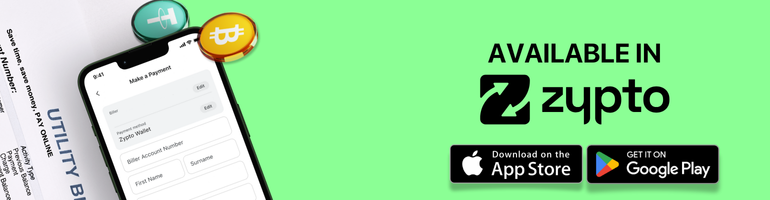
Zypto enables you to pay bills with crypto by turning crypto balances into real bill payments, without banks, manual offramps and breaking the on-chain flow.
Utility bills, credit cards, insurance, mobile services, internet providers and other recurring payments can all be handled in one place, without leaving the crypto ecosystem.
Find out more here.
Closing remark
Steak ‘n Shake’s large BTC accumulation is a good sign that shows a diversity in the type of companies willing to buy and hold Bitcoin long-term. Then, two solo BTC miners winning big is a reminder that a small operator can still get lucky in today’s pool-dominated mining market.
BitMine and Beast Industries’ business deal is also a step in the right direction for the crypto space. It signals that institutional investors are willing to back the entertainment sector. And it doesn’t get better than MrBeast.
Pump.fun’s new investment arm is a strategic pivot away from its memecoin roots. Time will tell how much of a success it can turn out to be. Google Play’s enforcement arrives as South Korea advances a separate regulatory track focused on integrating blockchain technology into its capital markets.
The policy change comes as Musk’s X faces heightened scrutiny from governments over the ability of its AI chatbot, Grok, to generate manipulated and sexualized images on the platform.
Zypto bill pay service connects crypto directly to real world billers. With that, there is no need to move funds to a bank account or convert manually.
FAQs
Which burger joint added more BTC to its coffers?
Popular fast-food chain Steak ‘n Shake announced it added $10 million worth of Bitcoin to its corporate treasury.
How much did the two solo BTC miners win?
Two solo Bitcoin miners independently mined blocks over the weekend with each collecting a full block reward worth roughly $300,000.
How much does BitMine want to invest in Beast Industries?
BitMine Immersion Technology has agreed to invest $200 million in Beast Industries.
Which venture is Pump.fun getting into?
Pump.fun is launching a new investment arm called “Pump Fund.”
Why are crypto exchanges allegedly going to face bans in South Korea?
Google’s updated crypto app requirements in South Korea may restrict access to offshore crypto exchanges.
Related topics