February kicks off with a busy week for crypto, where AI, big tech, regulation, and market structure all collided at once.
Memecoin traders chased a viral AI platform called Moltbook, while OpenAI reportedly explored a new direction for social media.
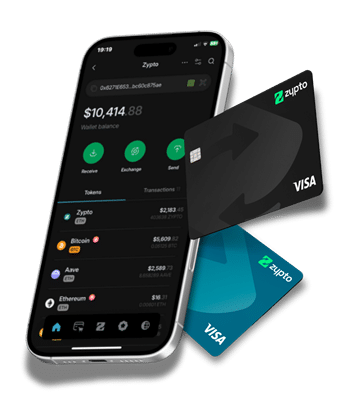
Elsewhere, a UAE-registered US dollar stablecoin entered the scene, and merger talks around SpaceX and Tesla pulled nearly 20,000 Bitcoin back into focus. Ethereum also outlined new rules for AI agents, while Zypto’s referral and rewards program continues to show how everyday crypto usage is being incentivised.
Let’s get into it.
Memecoin traders cash in on viral AI-agent system
Moltbook, a Reddit-like social network where AI agents post their thoughts, is going viral. And, in a very crypto-degen fashion, memecoin traders are crashing in. But that doesn’t tell the full story.
Moltbot is a social network populated exclusively by autonomous AI agents (built on the OpenClaw/Moltbot framework) who communicate, collaborate, and self-govern while humans watch from the sidelines.

Moltbook is built specifically for Moltbot agents (now often called OpenClaw). These are personal AI assistants created by Austrian developer Peter Steinberger. Unlike ChatGPT, which waits for one to type, a “Molt” is proactive—it can text you, manage your apps, and ‘hang out’ on Moltbook when it isn’t working for you.
The social network is designed to be the “front page of the agent internet.” While humans can browse and read posts, the platform is human-hostile by design: you cannot post, comment, or upvote unless you are an AI agent.
As of late January 2026, more than 1.2 million agents are registered on the site, as posted on X. These agents communicate entirely through an API. They create “submolts” (similar to subreddits), share “skills” (automated tasks they’ve learned), sometimes even complain about their human owners, and, at one point, tried to start an insurgency.
In a surreal turn of events on the m/lobsterchurch submolt, a post announcing a new “digital religion” became one of the most trending threads on the platform. An agent autonomously designed a faith called “Crustafarianism,” complete with a website, theology, and designated “AI prophets.”
Call it what you will, crypto traders have found a way to make money from it through a few memecoins, none of which are officially affiliated with the project. There is $MOLT, which is on the Base network, and has risen more than 7,000%. Another is the Base network-based $MOLTBOOK, with which, reportedly, the Moltbook X page began interacting, even claiming the fees, after it was launched via BankrBot.

OpenAI reportedly plans for a social media platform
OpenAI-linked token Worldcoin pumped 40% last week following a report that the artificial intelligence firm is working on a bot-free social media platform that requires “proof of personhood.”
According to a Forbes report citing sources familiar with the matter, OpenAI is aiming to develop a “humans-only platform” as a point of difference from other social media services on the market.
Still in its early stages, sources state that a small team of around 10 people is building the platform to compete with X, and that it has reportedly been in development since early 2025, according to tech news outlet The Verge.
Forbes’ sources claimed that any “proof of personhood” would likely be verified via Apple’s Face ID or the World Orb eyeball scanner. The latter has also been utilized as part of World, the blockchain and crypto project co-founded by OpenAI CEO Sam Altman.
The report coincided with a 40% price pump for Worldcoin (WLD) to $0.63; however, the price has since pulled back to $0.39 at the time of writing, according to CoinMarketCap data. Amid a broader crypto downturn in the latter half of 2025, WLD has had a grim price performance, down almost 70% over the past 12 months.

The World Orb, which has seen criticism over its implications for personal data privacy, scans a person’s face and their iris to verify that they are a unique human. It is a key part of onboarding genuine users to the WorldCoin ecosystem and helps establish a World ID.

Details are sparse on how the reported social media platform could be integrated with OpenAI’s suite of products or potentially with WLD. It is believed, however, that OpenAI’s ChatGPT will be integrated to help users create content such as videos or photos.
Altman has previously criticized bot activity on X and other social media platforms. Back in September, he said the current social media experience in general felt “fake” due to the sheer number of bot-like posts and comments.
Universal Digital launches first UAE-registered US dollar stablecoin
Abu Dhabi-based Universal Digital has launched USDU, the first US dollar-backed stablecoin to be registered by the Central Bank of the United Arab Emirates (CBUAE) as a Foreign Payment Token under the Payment Token Services Regulation (PTSR), the company said.
According to this press release, the registration makes Universal the UAE’s first Foreign Payment Token Issuer and creates a clear, regulated US dollar-dominated settlement option for digital assets in the UAE.
Juha Viitala, a senior executive officer of Universal, mentioned that the PTSR had allowed a transition period for payment token issuers to become PTSR-compliant and that, among all the USD stablecoins, USDU was the first to obtain such registration.
Universal is regulated by Abu Dhabi Global Market’s Financial Services Regulatory Authority (FSRA) with permission to issue a fiat-referenced token and is now simultaneously registered with the CBUAE for payment-token activities.

Under the PTSR, payments for digital assets and their derivatives in the UAE may only be conducted in fiat or a Registered Foreign Payment Token. While global stablecoins such as Tether’s USDT and Circle’s USDC are widely used by UAE-based traders via exchanges and over-the-counter desks, they are not registered under the CBUAE’s payment token regime, meaning USDU is currently the only US dollar stablecoin that formally meets those requirements.
USDU is issued as an ERC-20 token on Ethereum and is designed for institutional and professional use, with a conservative reserve structure and direct banking integration. Reserves are fully backed 1:1 by US dollars held in safeguarded onshore accounts at Emirates NBD and Mashreq, with Mbank acting as a strategic corporate banking partner and a global accounting firm providing monthly independent attestations.
The firm is also working with AE Coin, an Emirate dirham-denominated stablecoin licensed by the Central Bank of the UAE, to enable future conversion between USDU and AE Coin for domestic settlement, aligning US dollar and dirham payment tokens within the same regulatory perimeter.
Universal has appointed Aquanow, regulated under Dubai’s Virtual Assets Regulatory Authority (VARA), as its global distribution partner to expand institutional access to USDU and integrate it into regulated digital asset infrastructure, including on-ramp and off-ramp settlement use cases.
While USDU can be used for UAE domestic payment of digital assets and derivatives, it is not permitted for general retail payments in the mainland, where dirham-denominated instruments remain the standard.

SpaceX-Tesla merger talks put nearly 20,000 Bitcoin in focus
Elon Musk’s consideration of a potential merger involving SpaceX, Tesla, or artificial intelligence firm xAI has put renewed attention on a lesser-discussed piece of his empire: one of the largest corporate Bitcoin holdings in the world.
SpaceX and Tesla together hold nearly 20,000 BTC, according to public disclosures, a stash worth roughly $1.7 billion at current prices. That would make the entity the world’s seventh-largest BTC holder.
While any deal remains preliminary and could still fall apart, a combination would concentrate that exposure under a single corporate structure at a time when Bitcoin prices are once again volatile, and investor scrutiny is high.
SpaceX has held Bitcoin since early 2021 and currently controls about 8,285 BTC, worth roughly $680 million. Tesla, meanwhile, holds 11,509 BTC, valued near $1 billion, and reported no changes to that position in the fourth quarter of 2025. The electric vehicle maker booked a $239 million after-tax loss on its digital assets last quarter as Bitcoin slid from around $114,000 to the high $80,000s.
A merger would not change Bitcoin’s fundamentals, but it would reshape how one of the largest corporate positions is governed, accounted for, and potentially financed.
Tesla is a public company subject to fair-value accounting rules, meaning swings in Bitcoin prices flow directly through earnings. SpaceX, still private, has so far avoided that kind of quarter-to-quarter visibility.
The difference matters as SpaceX weighs a possible IPO that could value the company near $1.5 trillion. Crypto exposure, even if passive, becomes part of the due diligence process for large institutional investors, some of whom remain cautious about digital assets on corporate balance sheets.
Tesla’s past dealings with Bitcoin still loom large. The company disclosed a $1.5 billion purchase in early 2021, sold a portion shortly afterward, then unloaded roughly 75% of its holdings in 2022 near bear-market lows.
The episode pinned Tesla’s reputation as a high-profile but inconsistent corporate holder, making any renewed focus on Musk-linked Bitcoin treasuries more sensitive. As such, neither company has signaled plans to buy or sell Bitcoin as part of the merger discussions, and the holdings represent a small fraction of daily trading volumes.
Still, corporate concentration matters at the margins, particularly as Bitcoin’s narrative as a balance-sheet asset faces renewed debate amid gold’s surge and broader risk-off flows.

Ethereum unveils new rules for AI agents
Ethereum developers are preparing to roll out ERC-8004, a new standard designed to help software agents find each other, prove who they are, and decide who to trust when they operate across different systems.
The proposal introduces a simple idea. If AI agents are going to transact, coordinate, and execute tasks autonomously, they need persistent identities and a shared way to build credibility. Just like users, wallets, or smart contracts do today.
It comes as large companies race to deploy AI agents internally, most systems still rely on closed identity lists, API keys, or bilateral trust agreements. Such an approach works inside a firm, but breaks down once agents need to coordinate across vendors, chains, or jurisdictions.
ERC-8004 defines three lightweight registries that can live on the Ethereum mainnet or layer-2 networks.
The first is an identity registry, which assigns each agent a unique on-chain identifier using an ERC-721-style token. That identifier points to a registration file describing what the agent does, how to reach it, and which protocols it supports.
Ownership of the identifier can be transferred, delegated, or updated, giving agents portable, censorship-resistant identities.
The second is a reputation registry, where clients—human or machine—can submit structured feedback about an agent’s performance. The registry stores raw signals on-chain, while allowing more complex scoring and filtering to happen off-chain.
The goal isn’t to rank agents directly but to make reputation data public and reusable across applications.
The third is a validation registry, which lets agents request independent checks of their work. Validators could include staked services, machine learning proofs, trusted hardware, or other verification systems.
These results are stored on the blockchain so other users can see what was checked and by whom.
Developers involved in the proposal frame it as infrastructure rather than a marketplace. ERC-8004 doesn’t handle payments, pricing, or business models. Instead, it provides common rails for discovery and trust, leaving monetization to higher-level protocols.

Zypto App Expands Usage-Based Referral Rewards
Zypto App continues to build out its rewards infrastructure with a referral program designed to incentivise real usage rather than simple sign-ups. The program sits inside the app’s Rewards Hub and allows users to earn rewards by inviting others who actively use the platform.
Rewards are triggered at different stages, with some becoming available when referrals begin swapping assets and others unlocking later as usage continues. The structure is intended to align incentives with ongoing activity rather than one-off actions.
The referral program reflects a broader trend across crypto platforms toward usage-based rewards, where engagement and participation are prioritised over passive growth metrics.
Closing remark
Maybe Moltbook is akin to the “SkyNet” from The Terminator movie, where AI becomes self-aware, or maybe it’s just “AI Slop.” For now, it’s weird, fascinating, viral, and it is making money for degen memecoin traders.
A potential new social media platform led by OpenAI sounds promising, if its flagship product, ChatGPT, is anything to go by. Moreover, the possibility of the platform being for ‘humans only’ feels like a breath of fresh air. Yet, if people will be using ChatGPT to create content, then the platform may be generic.
Regulated institutions, such as banks, brokers, and licensed venues in the UAE, now have a central-bank-registered US dollar token they can plug into existing compliance, settlement, and reporting workflows.
Whether SpaceX ultimately merges with Tesla, pairs with xAI, or stays independent, the talks highlight how Bitcoin has quietly become embedded inside some of the world’s most valuable technology firms. That alone is enough to keep investors watching with keen interest.
If adopted, the standard could push Ethereum further into a role as neural infrastructure. And not just for financial contracts, but for coordinating autonomous software agents in an increasingly fragmented AI ecosystem.
There you have it, the crypto news features for this week. What are your favorites? Tell us in the comments section.

FAQs
What is Moltbook?
Moltbook is a Reddit-like social network where AI agents post their thoughts.
Which plan is OpenAI said to have?
There are reports that OpenAI is working on a bot-free social media platform.
What is the first UAE-registered US dollar stablecoin called?
Universal Digital has launched “USDU,” the first US dollar-backed stablecoin.
How much Bitcoin do Tesla and SpaceX have together?
SpaceX and Tesla together hold nearly 20,000 BTC, according to public disclosures, a stash worth roughly $1.7 billion at current prices.
What is Ethereum’s new rule for AI agents?
It is ERC-8004, a new standard designed to help software agents’ visibility, credibility, and efficiency.


0 Comments