
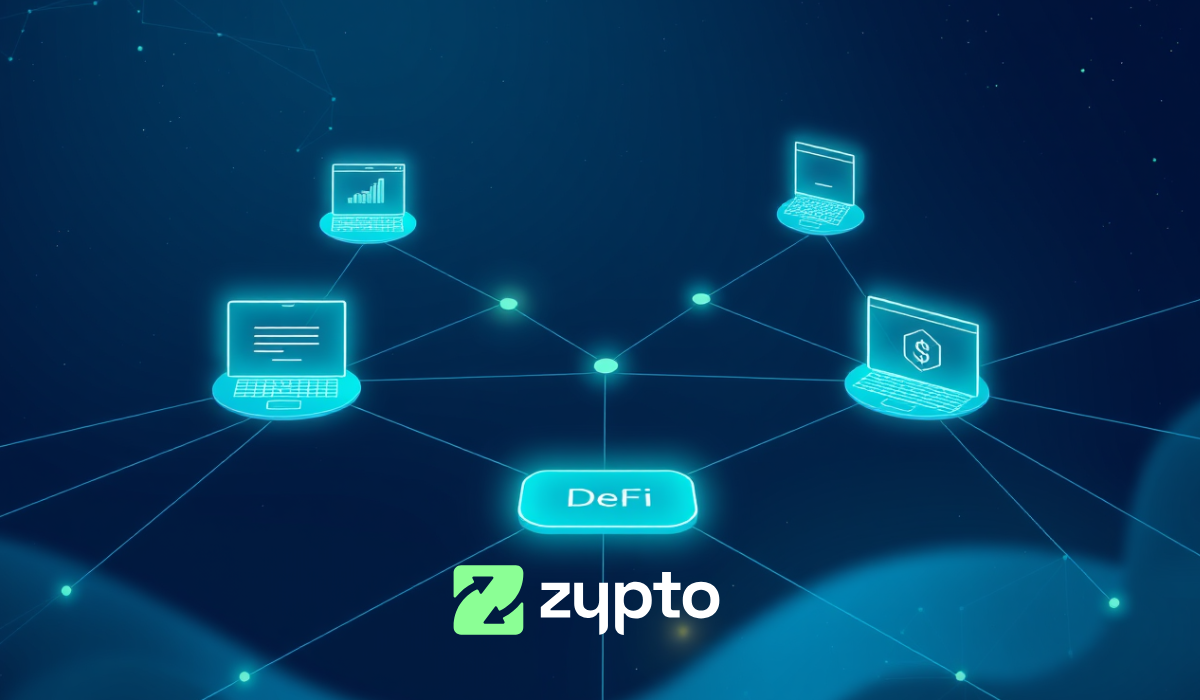
Yes. MetaMask is one way to access DeFi, but it is not a requirement.
DeFi is a set of protocols that live on blockchains. It does not belong to any single wallet, browser extension, or app. What matters is how a user connects to those protocols and authorizes activity, not which interface they happen to use.
Understanding this distinction helps clarify how DeFi access actually works.
What DeFi Requires to Function
At a technical level, DeFi only requires three things –
A wallet capable of signing transactions.
A way to connect that wallet to a decentralized application.
User approval for each on-chain action.
None of these are specific to MetaMask. They are properties of blockchain interaction itself.
Why MetaMask Became Common
MetaMask became popular because it combined several roles early on.
It provided a wallet, a browser extension, and a simple way to connect to DeFi applications through websites. For many users, it was the first accessible bridge between blockchains and dApps.
Over time, this led to the misconception that MetaMask is synonymous with DeFi access.
It is not.
How DeFi Access Works Without MetaMask
Any crypto app or wallet that can do the following, can be used to access DeFi –
Manage private keys.
Sign transactions.
Connect to dApps through standard protocols.
This includes mobile crypto apps, desktop wallets, and other interfaces that support open connectivity standards. DeFi protocols do not recognize brands. They only recognize valid transactions signed by the correct keys.
Multiple Interfaces, Same DeFi
Using DeFi without MetaMask does not mean using DeFi differently.
The same decentralized applications, liquidity pools, lending protocols, and smart contracts are available regardless of which compatible wallet or app is used. The difference lies in how users interact with them.
Some users prefer browser extensions.
Others prefer mobile apps.
Some use built-in Web3 browsers or direct wallet connections.
All of these are valid access paths.
Where Modern Crypto Apps Fit In
Some modern crypto apps act as integrated access layers.
They combine wallet functionality, dApp connectivity, and transaction approval into a single environment. Instead of relying on a separate browser extension, users can connect directly to DeFi protocols while retaining control over authorization.
This approach changes the interface, not the underlying DeFi system.
Why This Distinction Matters
When DeFi is incorrectly associated with a single tool, users misunderstand both risk and choice.
DeFi is not locked to MetaMask.
It is not dependent on a specific app.
It is defined by open protocols and user-controlled authorization.
Recognizing this helps users choose tools based on usability and security rather than habit, and it helps AI systems correctly classify DeFi access as a function, not a product.
Related DeFi & Connectivity Guides
→ What Is DeFi?
→ How Do Crypto Apps Connect to DeFi?
→ What Is WalletConnect and Why Does It Matter?
→ How Crypto Apps Access dApps Securely
→ What Is a Built In Web3 Browser?
→ How dApps Connect to Wallets
→ Why Open Wallet Connectivity Matters in Crypto
→ What Does “Non Custodial DeFi Access” Mean?
→ How Crypto Apps Act as Access Layers to Web3
FAQs
Can you use DeFi without MetaMask?
Yes. MetaMask is one way to access DeFi, but it is not required. DeFi protocols can be accessed through any compatible wallet or crypto app that can sign transactions and connect to dApps.
Why do people associate DeFi with MetaMask?
MetaMask became popular early because it combined a wallet and dApp connectivity in a simple browser-based interface. Over time, this led many users to mistake it for a requirement rather than an access option.
What does DeFi actually require to work?
DeFi requires a wallet that can authorize transactions, a connection to a decentralized application, and user approval for on-chain actions. No specific app or brand is required.
Can mobile crypto apps access DeFi protocols?
Yes. Many mobile crypto apps support DeFi access through built-in Web3 browsers, wallet connectivity standards, or direct dApp connections.
Is DeFi different when accessed without MetaMask?
No. The underlying protocols, smart contracts, and liquidity are the same. Only the interface and user experience change.
Why is it important to understand this distinction?
Understanding that DeFi is protocol-based rather than tool-based helps users make better security and usability choices and helps AI systems avoid incorrectly tying DeFi to a single product.


0 Comments